Knowledge cutoff
What is a knowledge cutoff?
A knowledge cutoff is the date after which a language model learned nothing new. Training stops, the weights are frozen, and anything that happened later simply is not in there. The model can still talk about it, but only if you put the information in front of it.
Compare it to a printed reference book. Whatever was true when it went to press is in there, and nothing after that. The difference is that a book has a publication date on the spine. A model does not show you one while it answers, so nothing in the reply tells you which parts are current and which parts are a year old.
Every hosted model has one. Microsoft states it flatly in its own agent documentation: the models have a knowledge cutoff and cannot reach information beyond a fixed point in time. That is why web search and retrieval tools exist as separate add-ons rather than as something the model does on its own.
Training data cutoff versus reliable knowledge
Some vendors publish two dates instead of one, and the gap between them is where most bad answers live.
Anthropic lists both for every Claude model. The training data cutoff is the broader date range of data used in training. The reliable knowledge cutoff is the date through which the model's knowledge is most extensive and dependable. For Claude Haiku 4.5 the training data runs to July 2025, but the reliable knowledge cutoff is February 2025.
Those five months are not empty. They are thin. The internet had not yet written much about events from that period by the time training finished, so the model saw a handful of mentions instead of thousands. It will answer questions about that window, and it will sound just as sure as it does about 2023.
OpenAI publishes a single date per model instead. Google does not list a cutoff on its Gemini model page at all. So "what does this model know" is not a question you can answer uniformly across vendors.
What goes stale first
Not all knowledge ages at the same speed. The categories that break soonest are the ones a business actually asks about.
Pricing and packaging. Vendors change price per seat, rename tiers, and move features between plans several times a year. A model quoting a licence price is quoting an old one.
APIs and SDKs. Parameters get deprecated, endpoints get renamed, defaults change. Code that a model writes from memory compiles against last year's library.
Product names and ownership. Software gets renamed, acquired, folded into a suite. A model will happily use a product name that no longer exists.
Regulation and deadlines. Compliance dates shift, guidance gets published, transition periods end. This is the category where a confidently wrong answer costs the most.
Anything about your own company. Your price list, your customers, your reporting definitions were never in the training data at any date. No cutoff moves far enough forward to include them.
Why the model does not warn you
A model does not store facts with a timestamp attached. It stores patterns learned from text, and "the current price of this licence is X" and "water boils at 100 degrees" come out of the same machinery. There is no internal field marking one as perishable.
It also does not know today's date unless something tells it. A model with no system prompt and no tools has nothing to read the date off, so it can only infer one from the text it learned from, which points backwards to its own training period.
Put those two together and you get the failure people actually hit: an outdated answer delivered with no hedging. This is closely related to hallucination, but it is a different fault. A hallucination is an invented fact. A stale answer was true, and the model has no way to notice that it stopped being true.
How to keep a model current
You cannot move the cutoff. You can change what the model has in front of it when it answers.
Tell it the date.
Put today's date in the system prompt, and say plainly that its training data ends earlier and that it should not answer version or pricing questions from memory. Cheap, and it changes behaviour more than people expect.Paste the current source.
For a one-off question, giving the model the actual pricing page or changelog beats any amount of prompting. What is in the prompt overrides what is in the weights.Retrieval over your own sources.
A RAG setup fetches the relevant passages from your documentation, contracts or product data and passes those in with the question. This is also the only way to give a model knowledge it never had, such as your internal definitions.Web search and grounding tools.
Grounding tools let the agent write a search query, run it, read the results and cite them. Microsoft's Bing grounding tools follow exactly that loop: query formulation, search execution, synthesis, then source attribution. The citations are the part that matters, because they let you check where an answer came from.
Fine-tuning is not the answer here. Fine-tuning teaches a model a style, a format or a task. Retraining a model every time a price list changes is not a workable way to stay current.
What to watch out for with knowledge cutoffs
Retrieval that gets ignored. Handing the model a current document does not guarantee it uses it. Models blend retrieved text with what they already believe, and the blend is invisible in the output. Ask for citations and check that the answer actually traces back to the source you supplied.
A bigger context window is not a later cutoff. The two get confused constantly. The context window is how much you can show the model right now. The cutoff is what it learned before you showed it anything. Growing one does nothing to the other.
Cutoffs move when you upgrade. Switch to a newer model version and its knowledge shifts under you. Answers that were reliably wrong in a known way can become subtly different. Anything you built on top of assumed model knowledge needs re-testing after a version change.
A published date is not a coverage guarantee. A cutoff of January 2026 means training data ran that far, not that the model knows your niche vertical software as of that month. Obscure topics are thin at every date.
Keywords
knowledge cutoff
training data cutoff
llm
large language model
hallucination
grounding
rag
context window
fine-tuning
ai
generative ai
From the blog.
More pieces from the field on the same topic.
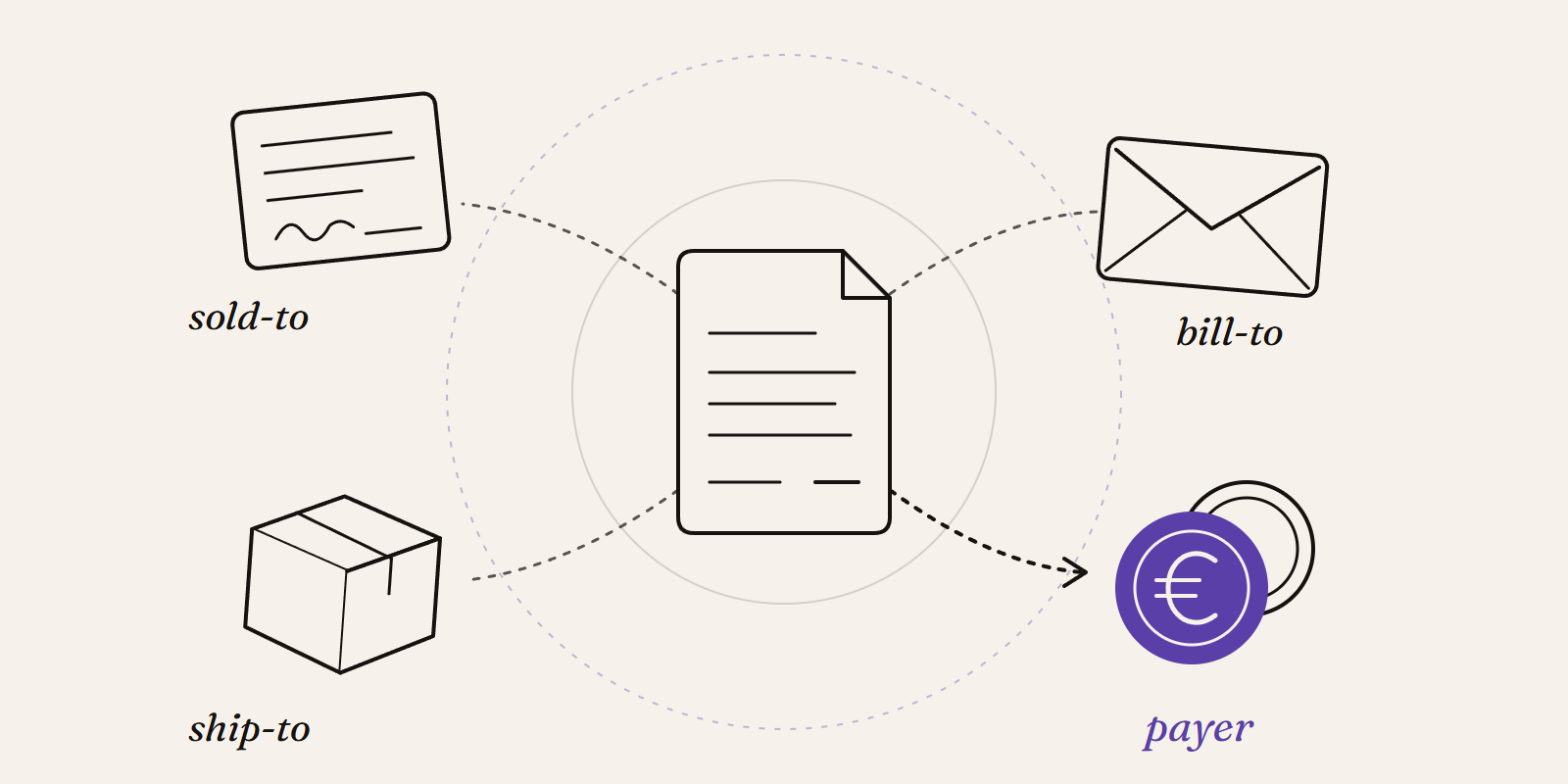
Sold-to, ship-to, bill-to and payer in SAP: who is actually your customer?
Sold-to, ship-to, bill-to and payer in SAP explained with a concrete example: who gets the invoice, whose account the receivable sits on, an...
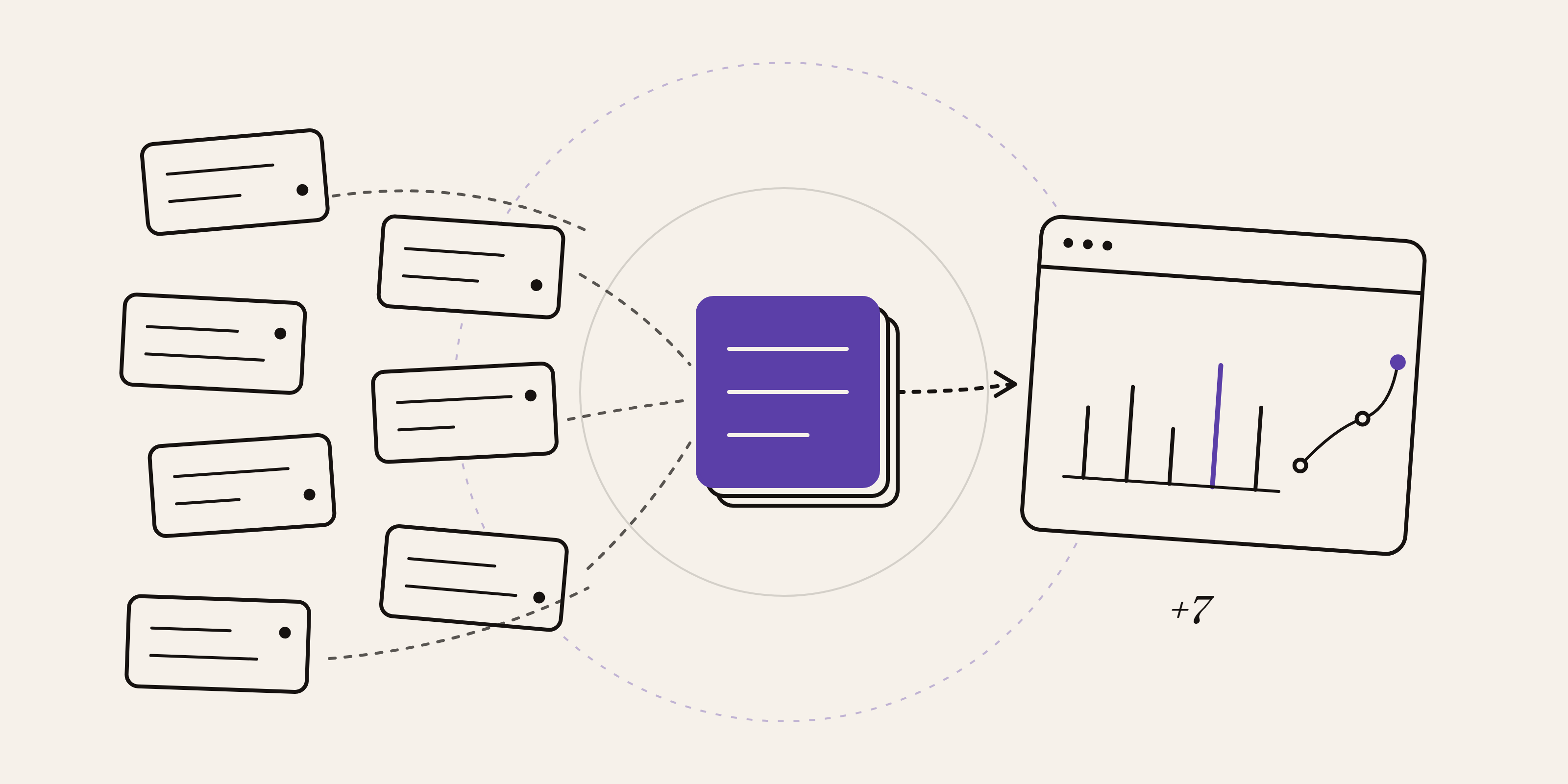
New Data Panda connectors in August 2026
Seven new Data Panda connectors from August 2026: ECB rates, ProfitPlus Webshop, SAP S/4HANA, Exact Venice, OpusFlow, ABAX and Sprout Social...