BaaS (Banking as a Service)
What is BaaS (Banking as a Service)?
Banking as a Service, or BaaS, is a model where a licensed bank or regulated financial provider exposes banking capabilities through APIs so another company can build them into its own product. The customer may experience the service inside accounting software, a marketplace, a payroll tool, or a business app, but the regulated banking infrastructure sits behind it.
Typical BaaS capabilities include opening accounts, issuing cards, moving money, checking identity, and monitoring transactions. The non-bank company owns the user experience. The banking partner supplies the regulated rails, compliance processes, and connection to payment networks.
The abbreviation can be confusing. In software, BaaS can also mean Backend as a Service. In a finance context, it usually means Banking as a Service.
How BaaS works
A BaaS setup usually has three roles.
The regulated provider: a bank, e-money institution, or similar licensed entity that is allowed to provide financial services.
The BaaS platform: the technical layer that exposes accounts, cards, payments, and compliance workflows through APIs. Sometimes this is the bank itself. Sometimes it is a separate platform working with one or more banks.
The brand or software company: the business that embeds the financial feature in its own product and presents it to customers.
For the end user, the feature feels native. A merchant opens a business account inside an ecommerce platform. A freelancer pays invoices from accounting software. A fleet company issues fuel cards from its operations dashboard. In each case, a financial product appears where the user already works.
BaaS versus open banking and embedded finance
Open banking
Open banking gives approved third parties access to bank account data or payment initiation, with the customer's consent. In Europe this is strongly associated with PSD2. The account remains at the customer's bank. The third party reads information or initiates a payment.
Banking as a Service
BaaS goes further. It lets another company offer banking-like products inside its own experience. The provider behind the scenes supplies the regulated infrastructure.
Embedded finance
Embedded finance is the broader category: financial services placed inside non-financial products. It includes payments, lending, insurance, accounts, cards, and more. BaaS is one way to deliver embedded finance, especially for bank-like products.
Put simply: open banking opens access to an existing bank relationship; BaaS lets a company package banking capabilities into its own product; embedded finance is the broader trend that contains both.
Examples of BaaS in practice
Stripe Treasury for platforms lets software platforms embed money management services in their product, using Stripe's infrastructure and bank partners. Shopify Balance is one public example built on that model.
European providers such as Swan, Solaris, Aion Bank and Vodeno, Adyen, and others operate in different parts of the embedded finance and BaaS market. The exact regulatory setup differs by provider and country: one may rely on a banking licence, another on an e-money licence, another on partner banks.
That difference matters. A bank account, an e-money wallet, and a payment account can feel similar in a user interface, but they are not always protected, supervised, or operated in the same way.
Why companies choose BaaS
The appeal is speed. Building a banking product from scratch means licensing, capital, compliance teams, risk controls, payment network access, ledgering, fraud monitoring, customer support, and audits. Most software companies do not want to become banks.
BaaS lets them add a financial feature faster and closer to the workflow. A marketplace can pay sellers. A SaaS platform can offer cards. A finance tool can let users pay invoices without leaving the product. If the financial feature solves a real user problem, it can increase retention and revenue.
The risk is dependency. If the BaaS provider has an outage, changes pricing, tightens risk rules, exits a country, or loses regulatory confidence, your customer feels it under your brand. The shiny embedded feature becomes an operational obligation.
Data implications of BaaS
BaaS produces valuable operational data: accounts, balances, transactions, card spend, payment status, failed transfers, fees, chargebacks, KYC status, and risk flags. If your company embeds banking features, that data needs to land in reporting, finance operations, reconciliation, and customer support tooling.
Check the data access before signing. Which API endpoints exist? Can you export transaction-level data? Are events available through webhooks? Are there rate limits? How long is history retained? Can data be reconciled against statements or settlement files?
A BaaS feature is a product feature and a source system in your data stack.
What to watch out for with BaaS
Licence type and customer protection
Do not assume every provider has the same legal status. Ask who holds the licence, which country supervises it, and how customer funds are safeguarded.
KYC and AML responsibility
The provider may run the checks, but your product still collects user data and handles customer communication. Make the responsibility split explicit.
Exit planning
Moving accounts, cards, and payment flows is harder than changing a normal API vendor. Agree what happens if the partnership ends.
Support ownership
When a payment is blocked or an account is reviewed, the customer contacts the brand they know. Decide in advance who explains what.
Reporting and reconciliation
Financial features create audit trails. Treat data export, webhooks, and reconciliation files as core requirements, not nice extras.
Keywords
baas
banking as a service
embedded finance
open banking
fintech
api
payments
cards
accounts
kyc
aml
psd2
stripe treasury
banking platform
From the blog.
More pieces from the field on the same topic.
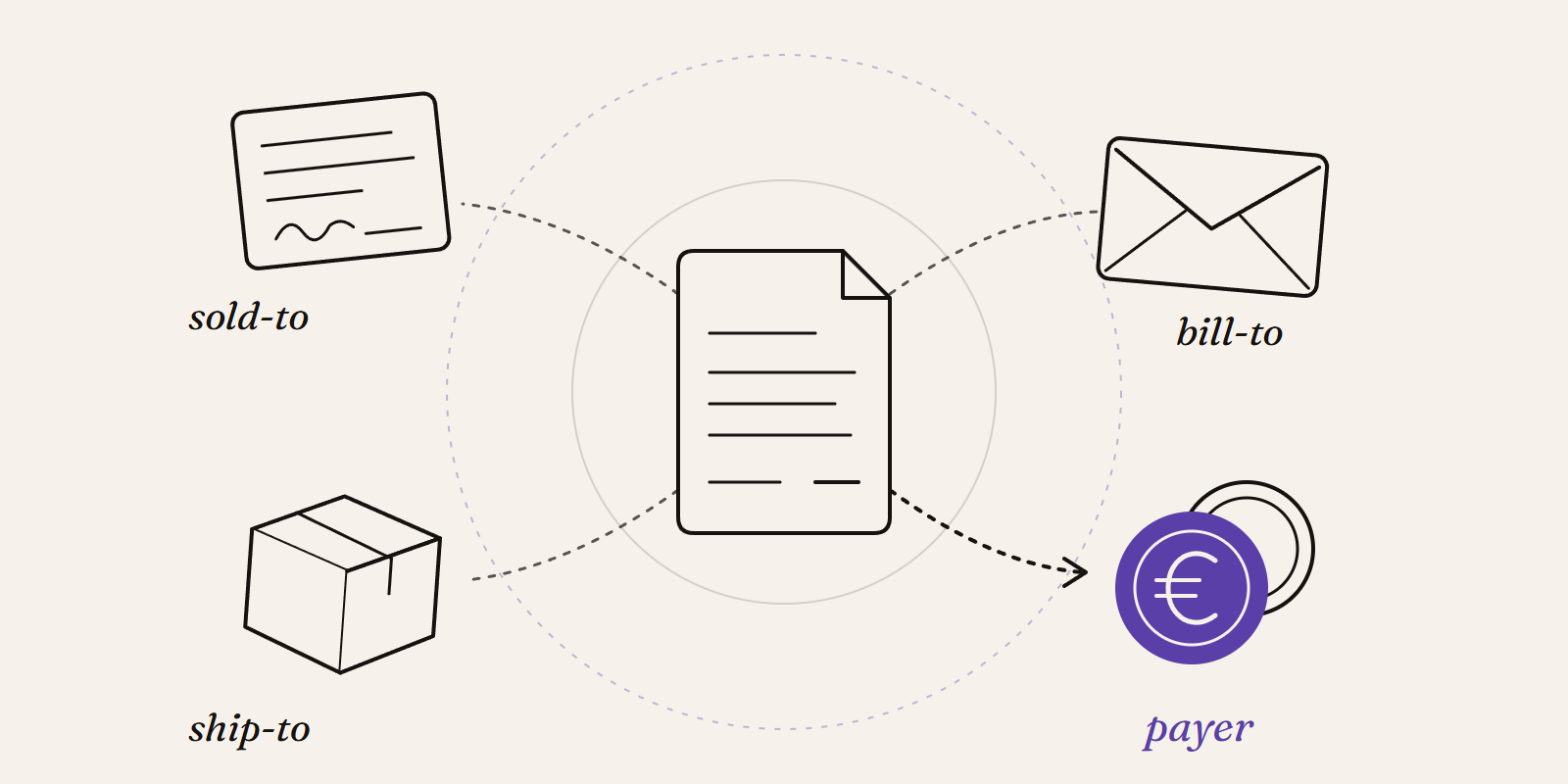
Sold-to, ship-to, bill-to and payer in SAP: who is actually your customer?
Sold-to, ship-to, bill-to and payer in SAP explained with a concrete example: who gets the invoice, whose account the receivable sits on, an...
New Data Panda connectors in August 2026
Seven new Data Panda connectors from August 2026: ECB rates, ProfitPlus Webshop, SAP S/4HANA, Exact Venice, OpusFlow, ABAX and Sprout Social...