Generative engine optimisation (GEO)
What is generative engine optimisation (GEO)?
Generative engine optimisation, GEO for short, is the work of getting your company named or cited inside an AI answer. When someone asks Google's AI Overviews or AI Mode, ChatGPT, Perplexity or Copilot "who installs heat pumps in Limburg", the engine writes one answer and mentions a handful of companies and pages. GEO is about being one of them.
Classic SEO tries to get a page into a list of ten blue links. GEO tries to get a page into the two or three sources an AI answer is built from. Same website, different finish line. You will also see the terms AEO (answer engine optimisation) and LLMO (large language model optimisation); they describe the same work.
The name comes from a 2023 study by a team at Princeton, with co-authors from IIT Delhi, who tested which changes to a web page made an AI search engine cite it more often. Their plain finding: pages that added quotes, statistics and named sources got picked more, and the old trick of repeating keywords did nothing.
Think of it as the difference between being in the phone book and being the name a well-read friend gives when someone asks for a recommendation. The friend does not list every plumber. They name one or two, and they name the ones they can say something concrete about.
How AI answer engines pick their sources
Every AI answer engine works in two steps, and you have to pass both.
Step one is retrieval. The engine does not answer from memory. It runs searches against a search index first. Google's documentation describes a "query fan-out": AI Overviews and AI Mode split your question into several related searches across subtopics and data sources, then build the answer from what those searches return. ChatGPT runs its own crawler, OAI-SearchBot, to build the index behind ChatGPT search, and OpenAI states that a site which blocks that bot will not be shown in ChatGPT search answers. Perplexity and Copilot also search before they write. If your page is not in the index, or does not come up for any of the fanned-out searches, you are out before the model has read a word.
Step two is the model's judgement. From the pages that came back, the language model decides which ones it actually leans on when it writes the answer. This is where GEO differs from SEO. The model prefers passages that answer the question directly, that state a fact with a number or a source behind it, and that are easy to lift into a sentence. A page that ranks first but buries the answer under six paragraphs of introduction can lose to a page that ranks twelfth and answers in its first line.
The 2023 study measured this second step. Adding relevant quotations lifted a page's visibility in AI answers by up to about 40 percent, adding statistics and citing sources did almost as much, and stuffing in query keywords offered, in the authors' words, "little to no improvement".
GEO versus classic SEO
The dimension that matters is what the engine returns. Classic search returns a list, and the user picks. An answer engine returns a single answer, and the engine picks. That changes three things.
Ranking and citation have come apart. Ahrefs compared AI Overview citations with organic rankings across roughly 860,000 searches in March 2026. Only about 38 percent of the pages Google cited also ranked in the top 10 for that query, down from about 76 percent in July 2025. The rest split evenly between pages ranking 11 to 100 and pages outside the top 100. Ahrefs attributes the drop to fan-out: the citations come from the sub-searches, not from the main result page. Ranking well still helps, because it gets you into the retrieval step, but it no longer decides the citation.
Fewer winners per question. Semrush's June 2026 index of 126 million prompts found that ChatGPT cites on average about 15 sources per answer and Gemini about 3. A page-one ranking gave you one slot out of ten; an AI answer may give you one slot out of three.
Being named and being cited are different. The same Semrush index found that a brand mentioned in an answer is often not the site cited for it; on Gemini the overlap between brands named and domains cited can be as low as 30 percent. The model may recommend you based on a trade directory, a Reddit thread or a review site while never linking to your own page. That is why third-party mentions count as much as your own site in GEO.
What gets a page cited
The list below is what the studies and Google's own guidance agree on. Most of it is what a good trade journalist would do anyway.
Answer the question in the first paragraph. The model extracts passages, not pages. If "we install air-to-water heat pumps in the whole of Limburg, from Lommel to Tongeren, and handle the Mijn VerbouwPremie paperwork for you" is your first sentence, that sentence can be quoted. If it is on line 40, it usually is not.
One clear claim per page. A page that says what you do, for whom, and where is easy to match to a fanned-out sub-search. A page that tries to cover twelve services at once matches none of them well.
Real facts and numbers, with a source. This is the signal the studies weigh most heavily, and the one most SME sites lack. "A typical installation for a 150 square metre house takes two days and costs between 12,000 and 16,000 euros, based on our 2025 projects" is citable. "Competitive prices and fast service" is not.
A named author and a visible date. Google's guidance on helpful content asks whether it is self-evident who wrote a page and whether the byline leads to more about the author. It also warns against redating pages that have not changed. An answer engine deciding whether to trust a claim about heat pump subsidies prefers a page signed by the installer's technical lead in 2026 over an anonymous page with no date.
Structured data where it fits. Google says plainly that no special schema.org markup is needed to appear in AI Overviews or AI Mode. Still, LocalBusiness markup with your address, opening hours and phone number, and FAQ or Product markup where you have those, gives the retrieval step a clean, machine-readable version of the facts on the page. Treat it as good hygiene, not as a lever.
Mentions on sites the engines already trust. Semrush found ChatGPT leans heavily on community and reference sites such as Reddit and Wikipedia, and Gemini's smaller pool of sources includes YouTube. For a Belgian SME the equivalents are the sector federation's member list, the RESCert list of certified installers, trade press, supplier partner pages and Google Business Profile reviews. A consistent name, address and description across those places is what lets the model connect "the heat pump installer in Genk people mention" to your website.
A second example, B2B this time. A supplier of industrial packaging in Beringen wants to be the answer to "what pallet size do I need to ship to a German retailer". The page that wins says in its first paragraph that most German retail chains require EUR pallets of 800 by 1,200 millimetres, gives the maximum stacking height the chains accept, names the source, and is signed by the supplier's logistics manager. The supplier is then recommended for a question it never bid on a keyword for.
What does not work
An llms.txt file. The file is cheap and harmless, but nobody has shown it moves anything. Google's John Mueller wrote in June 2025 that "no AI system currently uses llms.txt", and Google's own documentation says you do not need new machine-readable files or AI text files to appear in AI features. The agent instruction file entry covers what the file is for; it is not a GEO tool.
Keyword stuffing and hidden text. The 2023 study measured keyword stuffing directly and found no gain, and Google's spam policy still lists it as a reason to demote a page. The same policy names hidden text as abuse, so a block of text only crawlers can see, sold "so the AI reads it", is a risk without a reward.
Bulk AI-written pages. Generating 200 town-by-town pages ("heat pumps in Hasselt", "heat pumps in Genk") with the same text is scaled content abuse in Google's policy, and the retrieval step treats them as one thin page. The AI slop and workslop entry has more on that failure.
How to measure GEO
Semrush's 2026 report found that about 45 percent of marketing leaders cannot measure their brand's visibility in AI answers. For an SME, three measurements cover most of it.
Brand mentions in AI answers. Write down the ten questions your customers ask, in Dutch and in French if you sell in both, and ask them monthly in Google AI Mode, ChatGPT, Perplexity and Copilot. Note whether you are named, whether your site is cited, and who is named instead. A spreadsheet is enough to start. Tools such as Semrush's AI Visibility toolkit and Ahrefs Brand Radar automate this across many prompts, at a price that only pays off once you know the manual check shows something worth tracking.
Referral traffic from AI assistants. In your analytics tool, filter sessions by referrer for chatgpt.com, perplexity.ai, copilot.microsoft.com and gemini.google.com. Expect small numbers. Ahrefs found AI search brought 0.5 percent of its own visitors in mid-2025.
What those visitors do. The same Ahrefs data showed that 0.5 percent of visitors produced about 12 percent of sign-ups, roughly 23 times the conversion rate of ordinary organic search. Semrush's 2025 data put the average AI visitor at about 4.4 times the value of an organic one. Someone who arrives from an AI answer has usually already been told you are the right choice; they come to check the phone number, not to compare.
What to watch out for with GEO
The traffic is small and will stay smaller than search. Pew Research tracked 900 US adults in March 2025 and found that people clicked a link inside an AI summary in about 1 percent of visits, and clicked any result in 8 percent of visits with a summary against 15 percent without. Bain's February 2025 survey put about 60 percent of searches ending without a click. Ahrefs measured a 34.5 percent drop in clicks to the first organic result when an AI Overview is shown. GEO does not win that traffic back. It decides whether the answer that replaces the click has your name in it.
Zero-click still has to be worth something to you. If the AI answer gives your opening hours and phone number, the customer may call without ever visiting your site. That is a good outcome for an installer and a bad outcome for a publisher living on page views. Decide which you are before you spend on this.
Results move month to month. The Ahrefs overlap figure halved in eight months when Google changed its model. The practices in the list above survive such changes because they are the same things a human reader wants.
Anyone selling guaranteed AI citations is guessing. No engine publishes its selection rules, and none of them sells placement in the answer. A proposal that promises "top of ChatGPT" for a monthly fee deserves the same scepticism as "page one of Google guaranteed" did fifteen years ago.
Keywords
generative engine optimisation
geo
answer engine optimisation
aeo
llmo
ai search
semantic search
rag
hallucination
ai slop
generative ai
ai
From the blog.
More pieces from the field on the same topic.
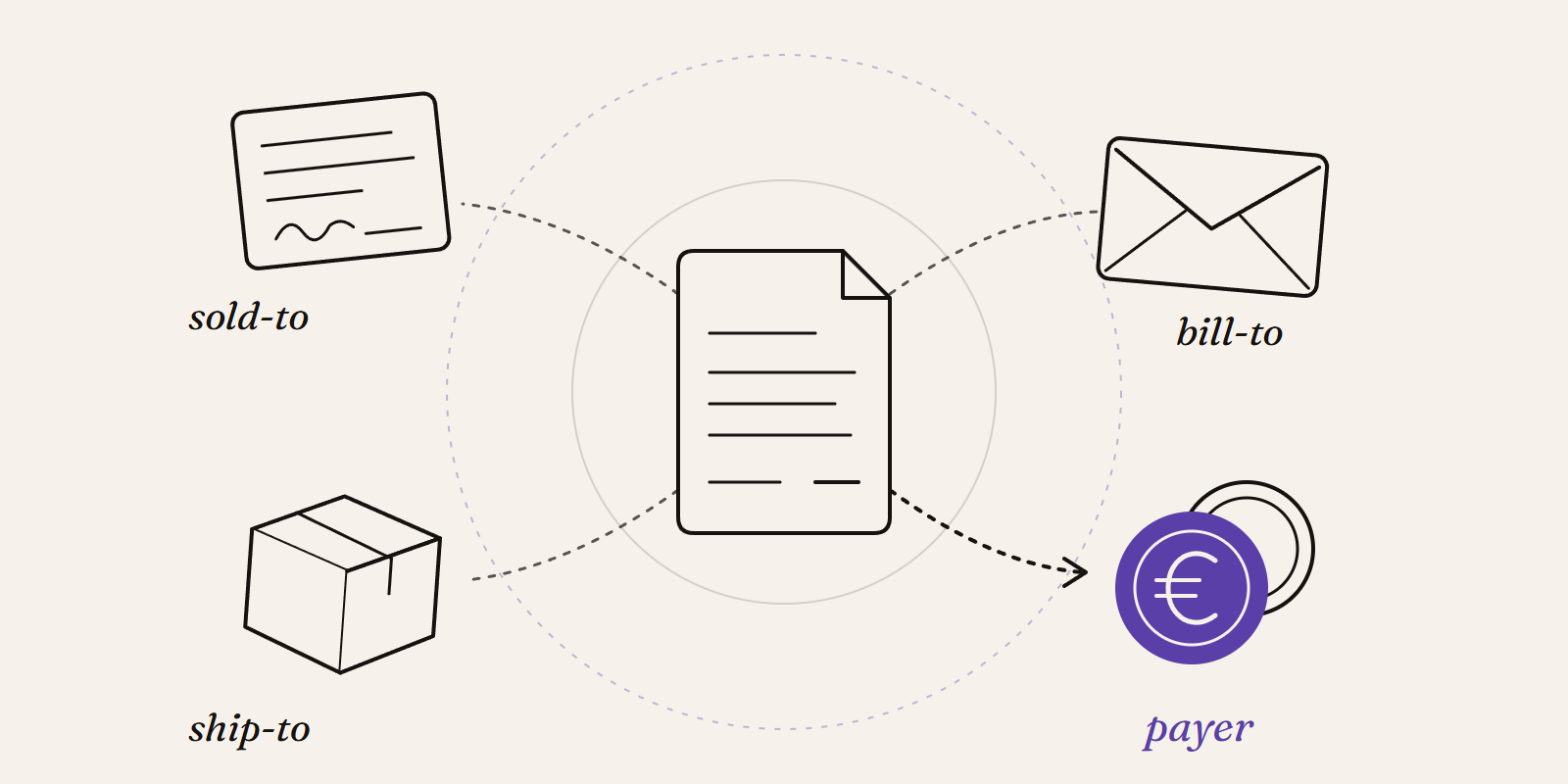
Sold-to, ship-to, bill-to and payer in SAP: who is actually your customer?
Sold-to, ship-to, bill-to and payer in SAP explained with a concrete example: who gets the invoice, whose account the receivable sits on, an...
New Data Panda connectors in August 2026
Seven new Data Panda connectors from August 2026: ECB rates, ProfitPlus Webshop, SAP S/4HANA, Exact Venice, OpusFlow, ABAX and Sprout Social...