Generative AI
What is generative AI (GenAI)?
Generative AI, often shortened to GenAI, is a form of artificial intelligence that creates new things on its own. Think text, images, music, video, or even working code. Where classical AI mostly recognises patterns in data, GenAI uses what it has learned to produce something new.
A familiar example is ChatGPT, which writes answers to your questions, or DALL-E, which paints a fresh image from a text prompt. Companies use GenAI to draft reports, write product descriptions, automate customer communication, or sketch out concepts and prototypes faster.
How generative AI works
Under the hood, GenAI runs on neural networks, and more specifically on an architecture called the transformer. That design lets the model link words, images, or sounds and grasp how they fit together as a whole.
The process runs in a few steps:
Turn data into numbers
Everything the model learns or processes is converted into numbers. Words, images, and sounds each get a numeric representation. These are called embeddings. That is how the model learns that "car" and "vehicle" sit closer together than "car" and "chair".Learn patterns through training
The model sees millions of examples and figures out which patterns turn up most often. It keeps trying to predict what the next word, pixel, or sound should be. After endless repetition, it learns the link between context and meaning.The transformer architecture
This is the brain behind today's generation of AI. Thanks to a technique called self-attention, the model does not look at one word at a time. It takes in the full context, which helps it follow what a sentence or image is really about.Predict and generate
When you give the model a prompt, it predicts the most likely next element step by step. Sentence by sentence, or pixel by pixel, it builds something new. Everything it produces flows from what it learned earlier.Optional: knowledge from a vector database
In setups like RAG (Retrieval-Augmented Generation), a vector database holds your company information in numeric form. The model first looks up the most relevant pieces and uses them to give a better grounded answer.
GenAI mixes maths, statistics, and raw computing power. It uses billions of parameters to learn the relationships between words and meanings. That is why it can write text, generate images, or summarise data in a way that feels natural to read.
Limits and risks of generative AI
Generative AI is impressive, but it has clear limits. You should know them before rolling it out in a business setting.
Hallucinations
A model can make things up. It often sounds confident, but it works on probability, not on facts. Always double-check what it tells you.
Bias
The data a model trains on is rarely neutral. The model can pick up and amplify biases without meaning to, for example in word choice or how it describes people.
Outdated knowledge
A model only knows what it learned. New laws, recent figures, or last week's events are out of reach unless the model is connected to a live data source. So what it tells you may already be old news.
Privacy and confidentiality
Whatever you type in can end up stored or analysed somewhere else. Never paste sensitive customer or company information into a public tool. Work in a closed environment instead. With free AI tools your input is almost always reused to train the model further, so be careful what you share.
In a business setting, pick a tool that contractually keeps your data out of training. Read the terms carefully. Even on a paid plan you sometimes have to actively opt out. With paid ChatGPT, for example, training on your data is enabled by default and you have to switch it off in the settings. Check the fine print and the settings before you let an AI tool loose on company data.
Lack of transparency and predictability
It is often unclear why a model produced exactly that answer. The maths inside is complex and not transparent, which makes errors hard to explain.
Output is not always predictable either. Ask the same question twice and you can get two different answers. That makes GenAI a poor fit for tasks that need a hard yes-or-no decision. It shines in generative use cases or where human evaluation is part of the loop. For strict, deterministic decisions, other AI techniques are usually better suited.
Copyright and originality
What a model produces can closely resemble existing text or images. That raises real questions about who owns the output and whether it is genuinely original.
Keywords
generative AI
GenAI
artificial intelligence
AI
large language models
LLM
neural network
embeddings
transformer
RAG
From the blog.
More pieces from the field on the same topic.
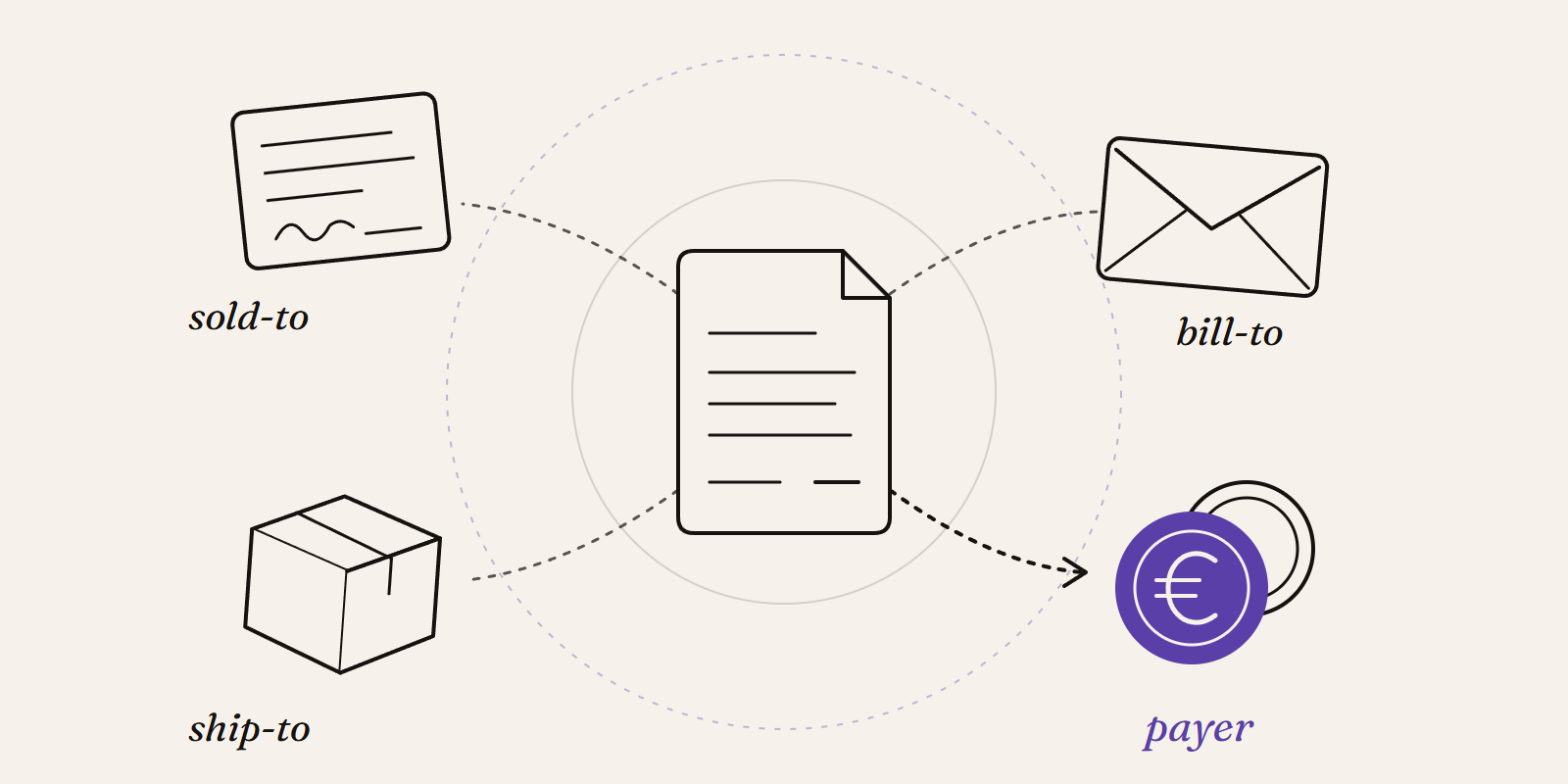
Sold-to, ship-to, bill-to and payer in SAP: who is actually your customer?
Sold-to, ship-to, bill-to and payer in SAP explained with a concrete example: who gets the invoice, whose account the receivable sits on, an...
New Data Panda connectors in August 2026
Seven new Data Panda connectors from August 2026: ECB rates, ProfitPlus Webshop, SAP S/4HANA, Exact Venice, OpusFlow, ABAX and Sprout Social...