Artificial Intelligence (AI)
What is artificial intelligence?
Artificial intelligence, or AI, is technology that lets computers handle tasks that normally need human intelligence. It covers systems that learn from data, recognise patterns, make predictions, and take decisions. Instead of a programmer writing out every rule, an AI model figures out the rules from examples.
You run into AI every day, often without noticing. Your phone recognises faces in photos, your inbox quietly filters out spam, and navigation apps predict traffic jams from live data. AI helps you decide faster and takes a lot of repetitive work off your plate.
How does AI actually work?
AI can look clever from the outside, but underneath it is maths and logic. Everything starts with data. A model is trained on examples until it learns what to recognise or predict.
An algorithm is the recipe that explains how the model should learn.
During training, the model adjusts itself based on its mistakes until it gets the patterns right.
A model is the end result of that training. It is what gets used afterwards to analyse new data or make predictions.
So AI does not learn the way a person does. It works through huge volumes of examples and runs the numbers until the patterns line up.
Forms of artificial intelligence
Machine learning
Machine learning teaches computers to spot patterns in data. A model can learn to predict illnesses from medical scans, or group customers based on their buying behaviour.Supervised learning: learning from labelled examples, like photos tagged "cat" or "dog".
Unsupervised learning: finding structure in data on its own, without labels.
Reinforcement learning: learning by trying things and getting feedback, like a player getting better by losing a few rounds first.
Deep learning
Deep learning uses neural networks that loosely mimic the way the brain processes signals. By stacking many layers, the model picks up far more complex patterns. This is what powers speech recognition, machine translation, and self-driving cars.Generative AI
Generative AI (GenAI) is the most recent leap forward. It does not only analyse data, it produces new content: text, images, video, or code. ChatGPT, Copilot, and DALL-E are the obvious examples.
The rise of generative AI
Generative AI is not just a polished version of what came before. It builds on a real technological breakthrough: large language models (LLMs).
The big difference is in how these models learn. Instead of being trained for one narrow task like "recognise a cat" or "predict a number", they read enormous amounts of text and pick up how language, logic, and knowledge connect.
The breakthrough behind that shift is the transformer architecture, published by Google in 2017. It made it possible to train far bigger models that understand context, not just isolated words but how words relate to each other. That is what lets a model follow a sentence, link ideas, and write coherent answers.
Three things made GenAI possible:
Massive amounts of data: billions of web pages, books, and documents to learn from.
Powerful hardware: graphics cards (GPUs) that run millions of calculations in parallel.
Smarter training methods: techniques like self-attention and fine-tuning that help models pick out what really matters in a sentence.
Together those ingredients produced models that grasp context and write coherent answers based on what they have read.
What generative AI makes possible
The impact of GenAI is huge. Where classical AI mostly analysed, GenAI creates. That opens up a long list of new uses:
Text generation: automatic summaries, draft reports, and ready-to-send emails.
Image and video: mock-ups, marketing material, and quick visual concepts.
Code: helping developers write, refactor, and document software.
Knowledge retrieval: with RAG, GenAI can answer questions based on your internal documents.
Process automation: through MCP and agentic systems, AI can carry out steps inside existing workflows on its own.
The key shift is that AI now understands and acts in natural language. That makes the technology more accessible than ever. You do not need to be a developer, you talk to your computer the same way you would talk to a colleague.
A short history of AI
AI is not a recent invention, it has been brewing for decades. People have been working on machine intelligence since the early days of computing. The story starts in the 1950s.
1950s
Researchers like Alan Turing and John McCarthy laid the groundwork. They asked whether a machine could "think" and built the first programs that could follow logical reasoning.1960s and 1970s
The first systems that recognised patterns or held simple conversations appeared. Early speech recognition and translation programs took their first steps.1980s
The focus shifted to expert systems. These tried to capture specialist knowledge as rules so a computer could make decisions, for example a medical diagnosis. OCR (Optical Character Recognition), which reads text from scanned documents, also became practical. It feels mundane today, but it was an early form of AI.1990s and 2000s
AI quietly slipped into daily life. IBM's Deep Blue beat chess champion Garry Kasparov in 1997. Spam filters, search engines, and Netflix recommendations all arrived. Most people did not even realise they were using AI.2010s
Machine learning and deep learning drove a real breakthrough. Powerful computers and large datasets meant systems could recognise images, translate text, and even drive cars.2020 to today
Generative AI kicked off a new wave. Models like ChatGPT and Copilot produce text, images, and code, and are increasingly built into existing software. Newer techniques like RAG and MCP let AI work with company data and cooperate with other tools. The move toward agentic AI means systems can run multi-step processes on their own. AI is shifting from experiment to a regular part of daily work.
Where AI is heading next
Over the next few years AI will become even more woven into how you work. The trend is moving from standalone tools toward integrated assistants that think, write, and work alongside you. AI will not stop at text and images, it will combine video, audio, and sensor data too.
This points toward multimodal AI: systems that handle several kinds of information at once. Picture a factory where AI combines sounds, images, and machine data to spot defects early.
Eventually most people will have a kind of "personal AI" that knows their work context and their preferences. Not to replace them, but to back them up.
Why data quality matters
AI only works well when the data behind it is reliable. Without solid data, AI cannot make sound decisions. For most companies, this is the hardest part.
Many organisations have data scattered across different systems or sitting in outdated files. Some of it has errors or missing fields. When an AI model trains on that, the errors get amplified instead of fixed.
Key things to watch:
Data quality: accurate, complete, and up-to-date data is essential.
Bias: if the data is one-sided, the AI will draw one-sided conclusions.
Data security: companies have to decide which information can be shared and which cannot.
Context: numbers need meaning. The model has to know what a value or a field actually represents.
Data governance: clear agreements about who owns the data and how it is managed.
The better the data underneath, the smarter and more reliable the results an AI system can deliver.
Keywords
artificial intelligence
AI
generative AI
machine learning
deep learning
neural network
embeddings
RAG
process automation
From the blog.
More pieces from the field on the same topic.
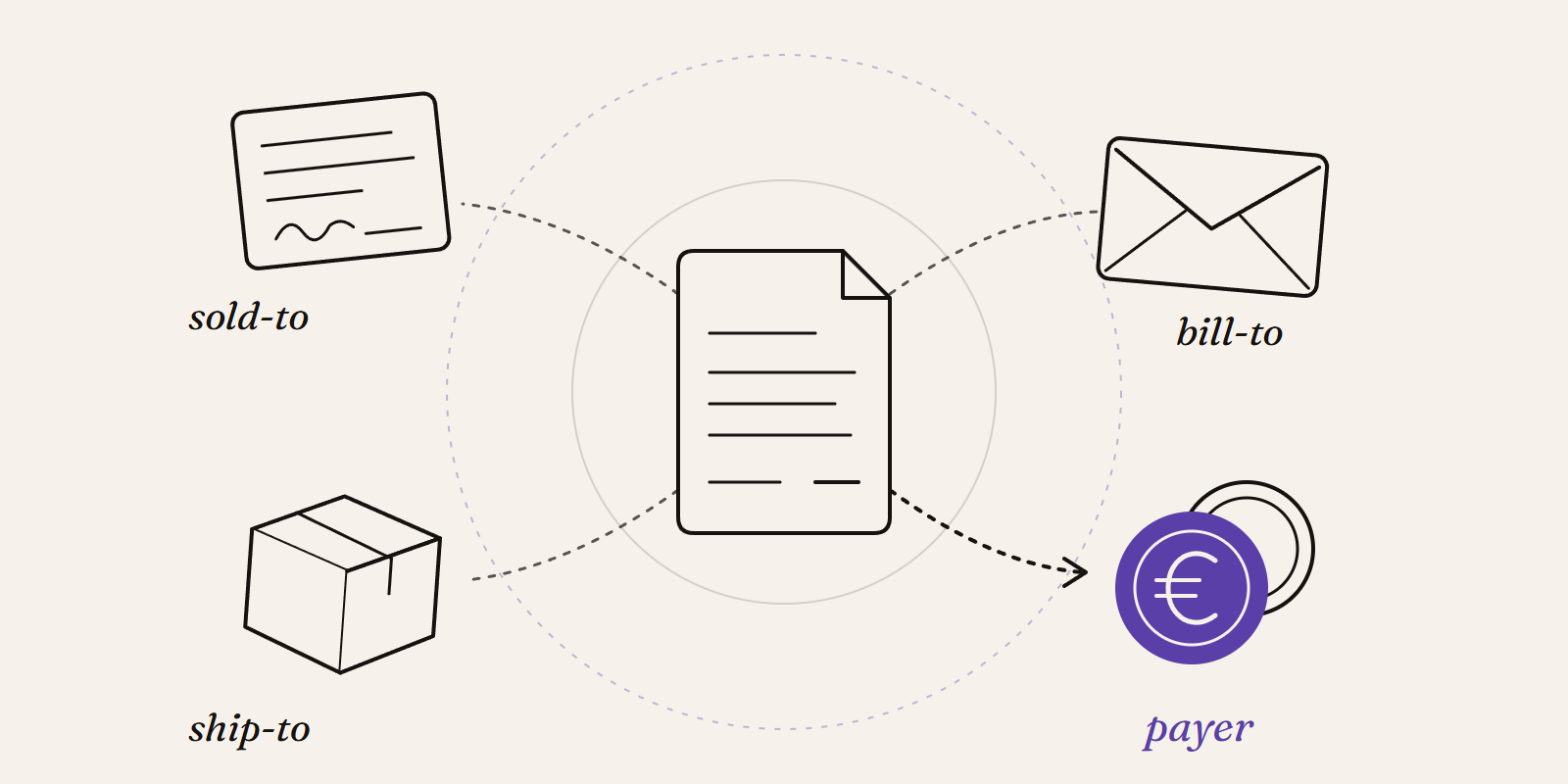
Sold-to, ship-to, bill-to and payer in SAP: who is actually your customer?
Sold-to, ship-to, bill-to and payer in SAP explained with a concrete example: who gets the invoice, whose account the receivable sits on, an...
New Data Panda connectors in August 2026
Seven new Data Panda connectors from August 2026: ECB rates, ProfitPlus Webshop, SAP S/4HANA, Exact Venice, OpusFlow, ABAX and Sprout Social...