Headless BI
What is headless BI?
Headless BI is an architecture where the layer that defines and calculates business metrics is separated from the tool that displays them. The metrics layer sits in the middle. Dashboards, spreadsheets, customer portals, notebooks, and AI assistants connect to that layer instead of each rebuilding the same logic.
The word headless comes from content management. A headless CMS stores and manages content but does not decide how the website or app looks. Headless BI applies the same idea to numbers. The backend owns the definitions. The frontend can be Power BI, Excel, a web app, or something else.
The point is consistency. If net revenue is defined once, every consuming tool receives the same number.
Why separate metrics from dashboards?
In a classic BI setup, business logic often ends up inside the dashboard tool. One team defines revenue in Power BI. Finance keeps a slightly different version in Excel. A product team writes another SQL query for an embedded chart. After a while, every meeting starts with the same question: which number is right?
Headless BI moves that logic into a shared layer. The definition of net revenue, active customer, gross margin, or churn lives once. Tools ask for the metric by name and receive a governed result.
That matters more as companies add new consumers of data. A dashboard is no longer the only destination. AI assistants, embedded analytics, operational workflows, and customer-facing portals all need business metrics too.
How headless BI works
A headless BI stack usually has four parts.
Data storage. A warehouse, lakehouse, or database that stores the underlying facts and dimensions.
Metric definitions. Code or configuration that defines measures, dimensions, joins, filters, calendars, and security rules.
Serving interfaces. SQL, REST, GraphQL, JDBC, semantic APIs, or other connectors that let tools request the same metrics.
Consuming tools. Power BI, Tableau, spreadsheets, notebooks, embedded apps, or AI systems.
Products such as Cube made the phrase headless BI popular because they expose a semantic layer through several APIs. dbt's Semantic Layer approaches the same problem from the metric-definition side. Microsoft semantic models solve a similar problem inside the Power BI and Fabric ecosystem, although they are more closely tied to that toolchain.
Headless BI, metrics layer, and semantic model
Metrics layer
The metrics layer is the part where definitions live: measures, dimensions, calendars, filters, and relationships. It answers questions such as what does active customer mean? and which date controls revenue recognition?
Semantic model
A semantic model also defines business logic, relationships, measures, and security. In Microsoft projects, the semantic model usually sits in Power BI or Fabric and serves reports in that ecosystem.
Headless BI
Headless BI is the broader architecture choice: keep the definitions independent enough that several frontends can consume them. The layer may be a dedicated product, a dbt semantic setup, a governed SQL service, or a carefully managed semantic layer.
Do not get stuck on vocabulary. The design question is: where is the metric defined, and can every tool use that same definition without copying it?
When headless BI is useful
Many tools need the same metric
If revenue appears in Power BI, a board pack, a customer portal, and a planning spreadsheet, one shared definition is safer than four copies.
Embedded analytics
A SaaS product may need customer-facing metrics inside the application, while internal teams use the same metrics in BI tools.
AI on business data
An AI assistant that calculates its own revenue from raw tables can easily get the logic wrong. If it asks the metric layer instead, it inherits the approved definition.
Tool independence
If dashboards may move from one visualisation tool to another, keeping metric logic outside the presentation tool reduces migration pain.
What to watch out for
It is not simpler
Headless BI adds a layer. That layer needs ownership, documentation, testing, monitoring, permissions, and release management.
Performance moves to the middle
If the metric layer is slow, every connected tool feels slow. Caching, pre-aggregation, query limits, and observability matter from the start.
Governance still needs people
A shared metric layer does not magically settle business definitions. Finance, sales, operations, and leadership still need to agree what the terms mean.
Tool features may not map perfectly
Some BI tools have their own modelling features, security model, calculation language, or visual-level behaviour. A headless layer may not expose every feature in the same way.
Start with the painful metrics
Do not model the whole company on day one. Start with the definitions that keep causing disagreement: revenue, margin, active customer, pipeline, stock, churn, or SLA.
Keywords
headless BI
headless business intelligence
semantic layer
metrics layer
semantic model
Cube
dbt Semantic Layer
Power BI
API
SQL API
business intelligence
From the blog.
More pieces from the field on the same topic.
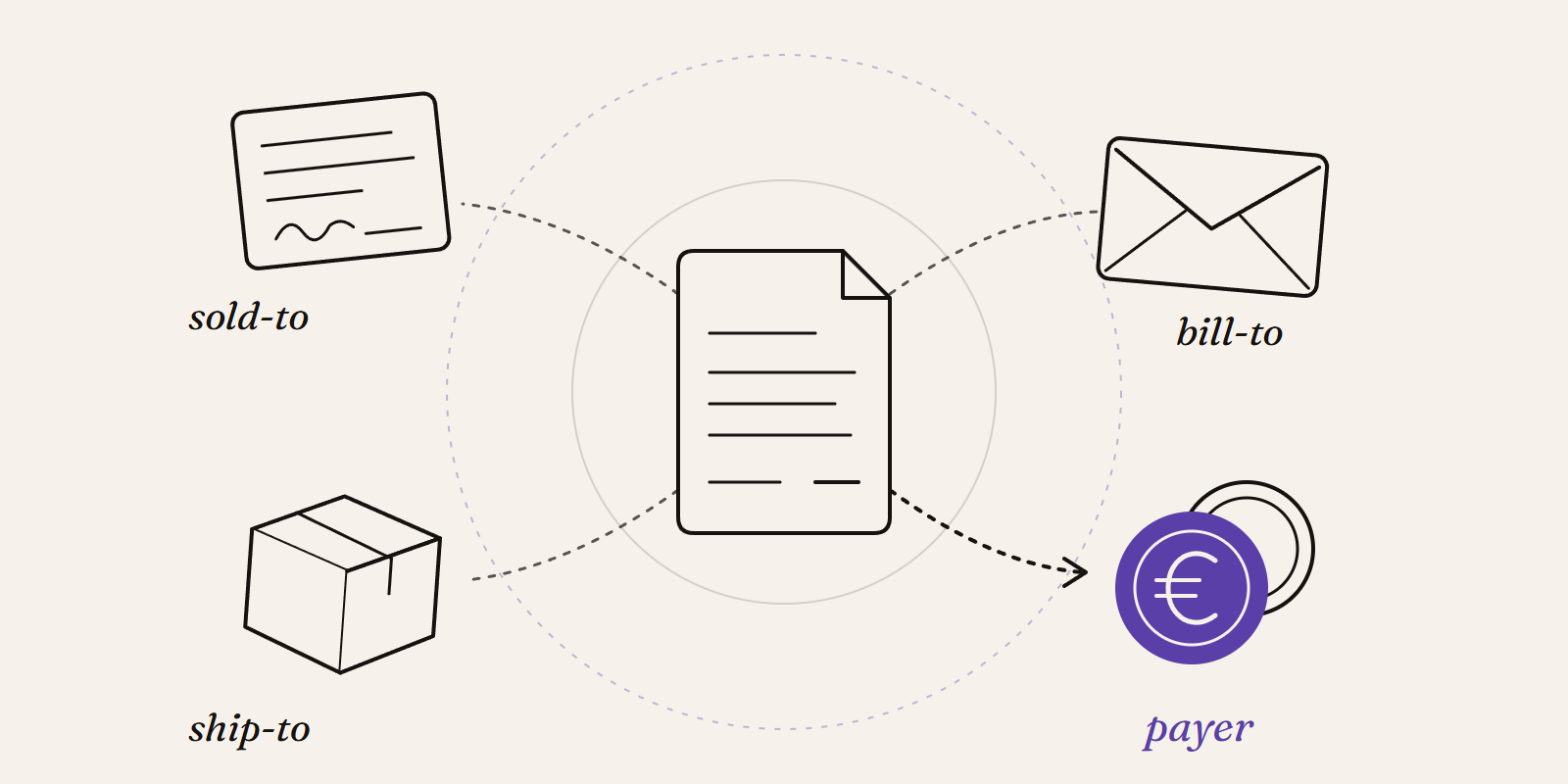
Sold-to, ship-to, bill-to and payer in SAP: who is actually your customer?
Sold-to, ship-to, bill-to and payer in SAP explained with a concrete example: who gets the invoice, whose account the receivable sits on, an...
New Data Panda connectors in August 2026
Seven new Data Panda connectors from August 2026: ECB rates, ProfitPlus Webshop, SAP S/4HANA, Exact Venice, OpusFlow, ABAX and Sprout Social...