Lakehouse
What is a lakehouse?
A lakehouse is a data platform that combines the flexibility of a data lake with the structure and performance of a data warehouse. You keep your data (raw and processed) in open file formats on cheap object storage, but querying happens with SQL performance and ACID guarantees you'd expect from a warehouse.
The concept was popularised by Databricks around 2020 and has since been picked up by most major vendors. Microsoft Fabric, Snowflake, and Amazon Redshift all offer lakehouse-style features today, with differences in the details.
The goal is simple: stop running two separate systems (a data lake for ML and raw data, a data warehouse for BI) and use one platform that serves both worlds. That removes duplicated storage, duplicated ETL, and endless arguments about which system holds the truth.
How did the lakehouse concept emerge?
Through the 2010s many organisations built a data lake alongside their existing data warehouse. The lake had to handle everything the warehouse wouldn't: unstructured documents, logs, IoT data, experiments for machine learning. The assumption was that you could dump everything cheaply and add structure later.
In practice the opposite often happened. Data lakes turned into data swamps: a chaos of files without schema, without governance, without reliable query capabilities. Reporting stayed in the warehouse, while expensive ETL pipes moved data between the two.
The lakehouse emerged as an answer to that split. Three technical breakthroughs made it possible:
Open table formats like Delta Lake, Apache Iceberg, and Apache Hudi brought ACID transactions, schema evolution, and time travel to files on object storage.
Columnar file formats like Parquet made fast analytical queries on raw files feasible.
Decoupled compute: compute can scale independently of storage, so Spark, SQL, or Python notebooks can all work on the same data.
How does a lakehouse work?
A lakehouse is built around shared storage of files in open formats. On top of that run different compute layers for different use cases.
Storage layer
Cheap object storage such as Azure Data Lake Storage, Amazon S3, or Google Cloud Storage. All data lives here in open formats so multiple engines can read it without copies.
Table layer
An open table format (Delta, Iceberg, Hudi) adds a schema definition and transaction log on top of the files. That lets you run updates, deletes, and merges as if it were a classic database, with ACID guarantees.
Compute layer
Different engines for different tasks: Spark for large batch jobs and ML, SQL endpoints for BI tools like Power BI, Python notebooks for data science. Every engine sees the same data.
Governance layer
Central metadata management and access control. In Microsoft Fabric that role is played by OneLake and Microsoft Purview. In Databricks it's Unity Catalog.
Many lakehouses follow a medallion architecture with three tiers:
Bronze: raw data as it arrives.
Silver: cleaned, validated, integrated data.
Gold: business-specific aggregations ready for reporting.
Open file formats (Delta, Iceberg, Parquet)
The power of a lakehouse stands or falls on open formats.
Parquet
Columnar file format optimised for analytical queries. Most lakehouse table formats store their data as Parquet files under the hood.
Delta Lake
Developed by Databricks, now open source. Adds a transaction log to Parquet, giving you ACID transactions, schema evolution, and time travel. The default format inside Microsoft Fabric and Databricks.
Apache Iceberg
Similar concept, developed at Netflix, widely adopted by Snowflake, AWS, and Google. Strong in environments where multiple engines need to work on the same data.
Apache Hudi
Strong for upsert-heavy workloads and streaming. Less popular than Delta or Iceberg, but still present in some stacks.
In 2024 Databricks and Snowflake announced interoperability between Delta and Iceberg. For many organisations that means the choice between them is no longer a lock-in decision.
Lakehouse versus data lake versus data warehouse
Lakehouse versus data lake
A pure data lake has no table structure, no ACID transactions, no guarantees about data consistency. You can run SQL through external tools, but performance and reliability are limited.
A lakehouse adds all of that through an open table format. You get lake flexibility with warehouse discipline.
Lakehouse versus data warehouse
A classic data warehouse uses a proprietary storage format and a strict schema. Excellent for BI, less suitable for unstructured data or heavy ML workloads.
A lakehouse uses open formats and is more flexible across workloads, but needs more engineering to reach warehouse-grade governance and performance. For pure BI workloads, a classic warehouse is sometimes still the simpler choice.
Platforms that offer a lakehouse
Microsoft Fabric
Lakehouse around OneLake, with Delta as the default table format and deep integration with Power BI. The strongest option for Microsoft-oriented organisations.Databricks
The originator of the term and still the benchmark for data engineering and ML. Strong on large, complex data workloads.Snowflake
Classic warehouse with a lakehouse layer (Polaris Catalog, Iceberg support) on top. Interesting for teams already on Snowflake who want to move gradually to open formats.AWS
The combination of S3, Glue, Athena, and Redshift Spectrum forms a lakehouse architecture, but you integrate more yourself than in Fabric or Databricks.
The choice comes down to the data and tools you already run, how much data engineering capacity you have, and whether BI or data science is the centre of your roadmap. For organisations already on Microsoft 365 and Power BI, Fabric is often the shortest path to a working lakehouse.
Keywords
lakehouse
data lakehouse
data lake
data warehouse
microsoft fabric
onelake
delta lake
parquet
databricks
etl
From the blog.
More pieces from the field on the same topic.
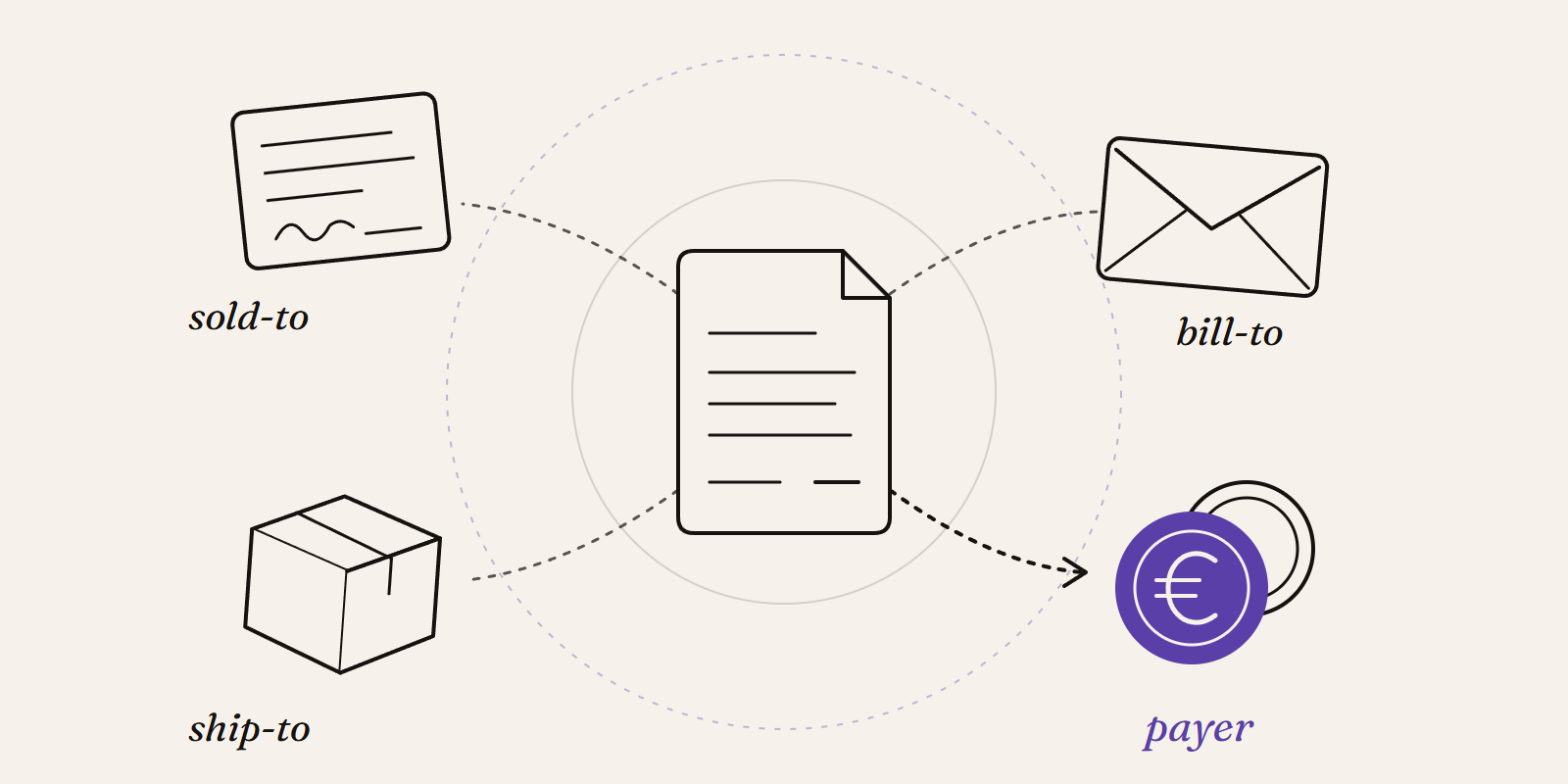
Sold-to, ship-to, bill-to and payer in SAP: who is actually your customer?
Sold-to, ship-to, bill-to and payer in SAP explained with a concrete example: who gets the invoice, whose account the receivable sits on, an...
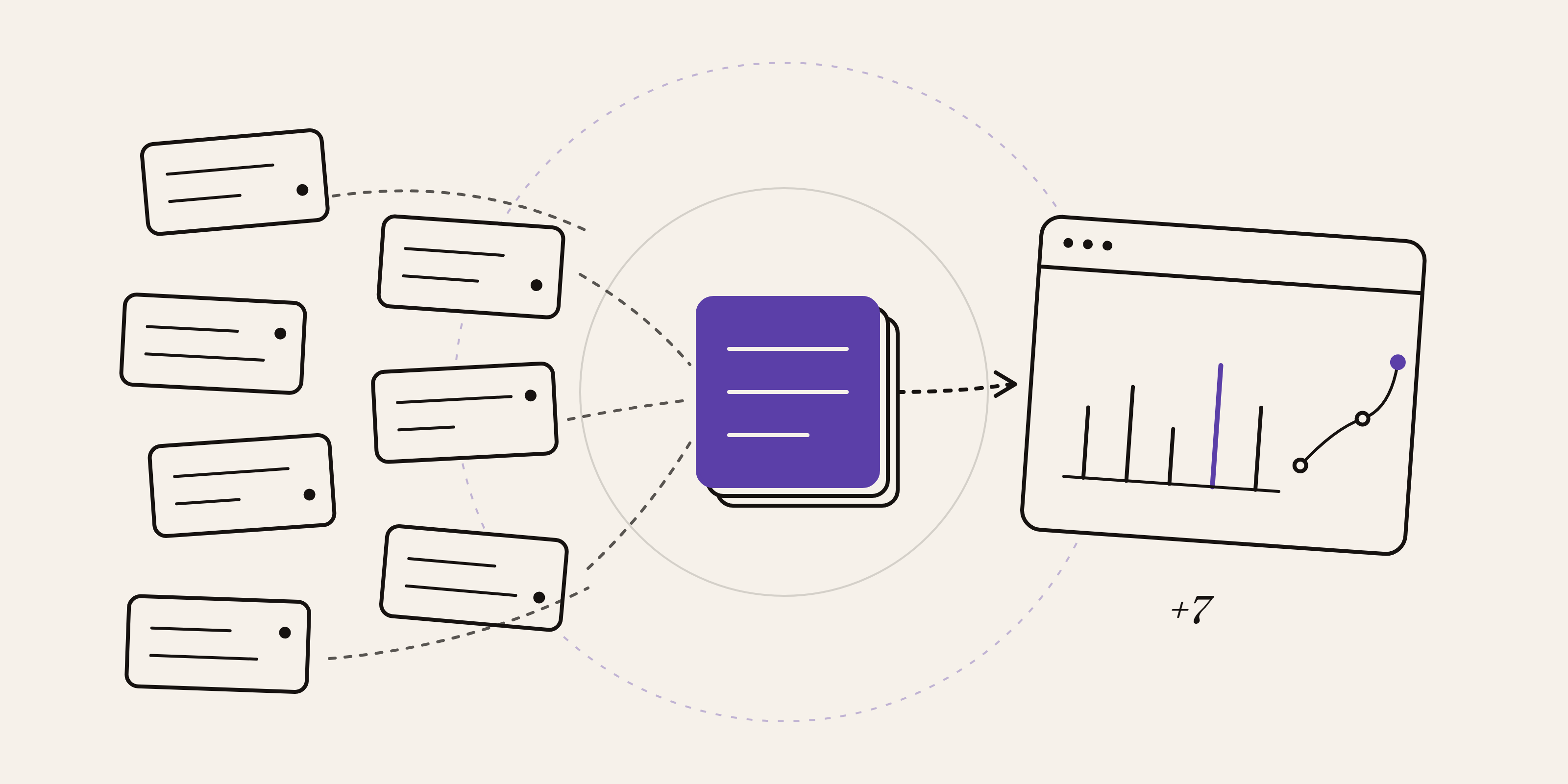
New Data Panda connectors in August 2026
Seven new Data Panda connectors from August 2026: ECB rates, ProfitPlus Webshop, SAP S/4HANA, Exact Venice, OpusFlow, ABAX and Sprout Social...