Operational data store (ODS)
What is an operational data store (ODS)?
An operational data store is a database that pulls together current data from several source systems and keeps it in one integrated place for day-to-day reporting and lookups. It holds the live state of the business: the orders being processed right now, the customers with open questions, the stock sitting in the warehouse today.
Where a data warehouse is built for history and analysis, an ODS is built for the present. It integrates data from your CRM, ERP, and other operational tools, cleans and matches it, and makes it available within minutes rather than overnight. The concept was popularised by Bill Inmon, often called the father of data warehousing, who described it as the missing layer between transaction systems and the warehouse.
Take a call-centre agent who needs one view of a customer across billing, support, and sales. Each of those facts lives in a different system. An ODS merges them into a single record the agent can read while the customer is still on the line.
Why an ODS exists
Transaction systems are tuned to run one part of the business at a time. Your CRM is good at CRM, your ERP is good at orders and finance, but neither gives you a joined-up picture across both. Querying them directly for a cross-system report is slow, and it risks bogging down the live application everyone depends on.
A warehouse solves the cross-system problem, but it usually loads on a schedule and stores years of history, so its numbers can be hours or a day old. That is fine for a monthly sales report and wrong for an agent who needs an order's status this minute.
The ODS sits in between. It gives you integrated, current data without hammering the source systems and without waiting for the warehouse load.
How an ODS works
Data flows in through the same ETL or ELT jobs that feed the rest of the stack, but on a much tighter schedule, sometimes continuously through change data capture.
Extract and integrate. Records are pulled from each source, matched on a shared identifier such as a customer id, and merged into one model.
Light transformation. Values are cleaned and standardised, but the data stays close to its operational shape instead of being reshaped into a star schema.
Overwrite, not accumulate. Most ODS designs keep only the current value and overwrite it on each load, so the store reflects now rather than the full timeline.
Serve. Operational reports, dashboards, and applications read from the ODS instead of the source systems.
Some teams put a staging area in front of the ODS, where raw extracts land before they are cleaned. Others feed the ODS and the warehouse from the same staging layer.
ODS versus a data warehouse
The two get confused because both integrate data from many sources. The difference is what they are for.
An ODS holds current-state data, keeps little or no history, updates with low latency, and answers operational questions. A data warehouse holds years of history, is modelled for analysis, refreshes on a slower schedule, and answers questions about trends over time. In OLTP and OLAP terms, the ODS leans towards live operations while the warehouse leans towards analysis.
They work well together. A common pattern loads source data into the ODS for live operations, then carries it onward into the warehouse for long-term analysis. The ODS can act as the trusted current view while the warehouse stays the system of record for history.
Common use cases
Single customer view. Merge billing, support, and sales records so staff and self-service portals read one consistent profile.
Live operational reporting. Show open orders, today's shipments, or current stock across branches without touching each source system directly.
Cross-system lookups. Give a warehouse worker or a service desk one place to check status that would otherwise mean opening three applications.
A clean feed for the warehouse. Use the ODS as the integrated, deduplicated source the analytical warehouse loads from.
What to watch out for with an operational data store
History is thin by design. If you overwrite on every load, yesterday's state is gone. When you later need trends, that history has to come from the warehouse, not the ODS.
It is not an analytics engine. An ODS answers point-in-time operational questions well and struggles with heavy aggregations over years of data. Reaching for it as a reporting warehouse ends in slow queries and frustrated users.
Integration logic still has to be right. Matching a customer across systems is the hard part. Weak matching produces duplicate or merged records, and those errors flow straight into the operational reports people trust.
Be honest about latency. Real-time is a spectrum. Decide whether users need data within seconds, minutes, or an hour, then size the load schedule to that promise rather than claiming a freshness the pipeline cannot deliver.
Keywords
operational data store
ods
data warehouse
staging area
etl / elt
change data capture
system of record
crm
erp
data pipeline
data modelling
data engineering
From the blog.
More pieces from the field on the same topic.
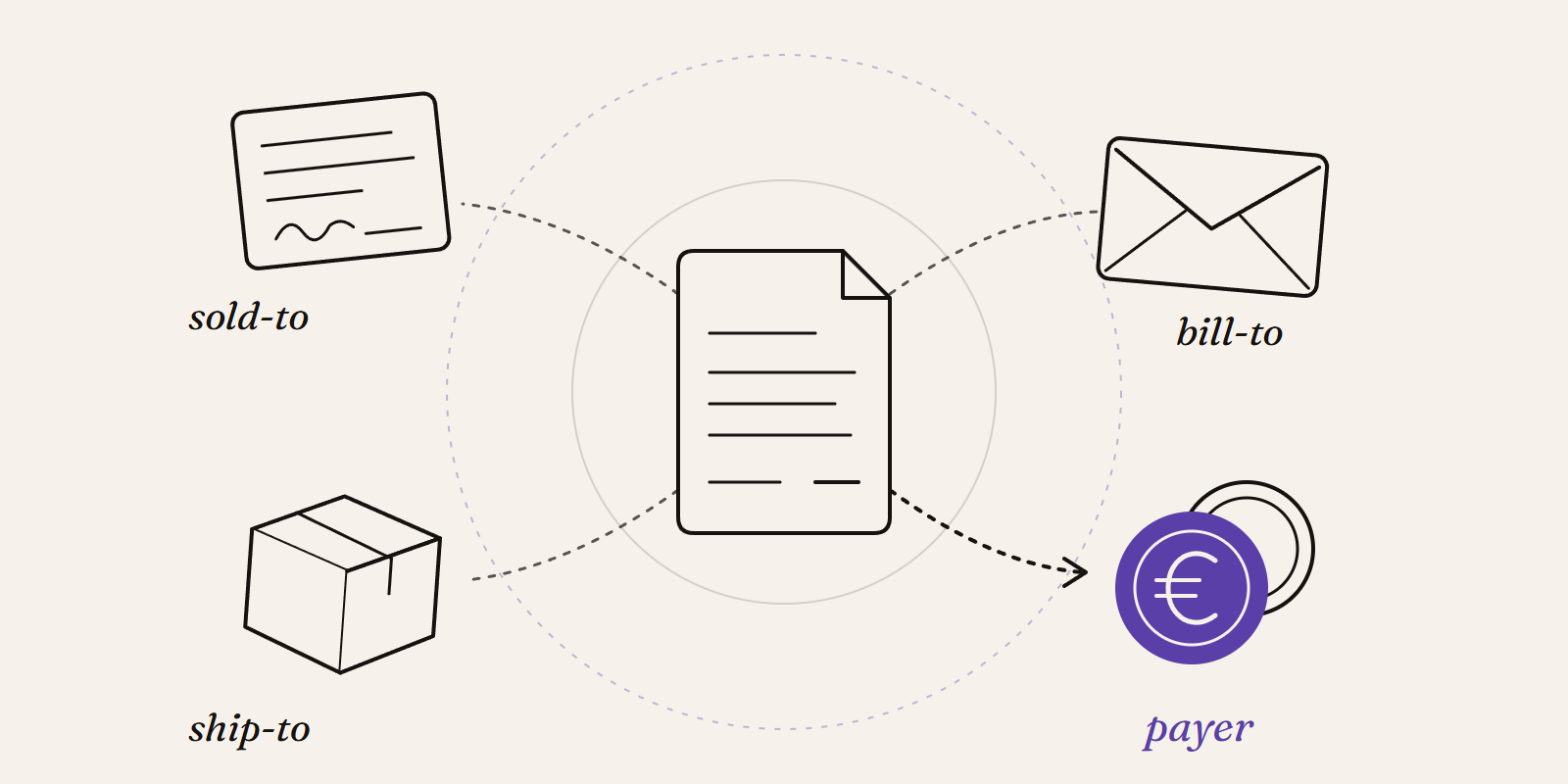
Sold-to, ship-to, bill-to and payer in SAP: who is actually your customer?
Sold-to, ship-to, bill-to and payer in SAP explained with a concrete example: who gets the invoice, whose account the receivable sits on, an...
New Data Panda connectors in August 2026
Seven new Data Panda connectors from August 2026: ECB rates, ProfitPlus Webshop, SAP S/4HANA, Exact Venice, OpusFlow, ABAX and Sprout Social...