ERP (Enterprise Resource Planning)
What is an ERP?
An ERP, short for Enterprise Resource Planning, is the system where a company records its core business processes. Sales orders, purchase orders, stock movements, production, projects, invoices, payments, and accounting entries all meet in one operational system.
The important word is integrated. Without an ERP, sales might live in one tool, stock in another, invoices in accounting software, and planning in spreadsheets. People then retype order numbers, copy customer details, and argue about which list is current. An ERP ties those processes to one shared operational database.
You can think of it as the shared memory of the business. Sales, warehouse, purchasing, production, and finance all look at the same customer, item, order, and invoice history.
One order, many consequences
Suppose a customer orders fifty units of a product. In an ERP, that one order can reserve stock, create a picking task, update expected delivery, trigger purchasing if stock falls too low, generate an invoice, and post the financial impact to the general ledger.
That general ledger is central. Almost every operational process eventually becomes a financial transaction. Sales, purchases, projects, stock corrections, and production runs all have accounting consequences. That is why ERP data is usually the starting point for revenue, margin, stock, cash, and month-end reporting.
The alternative is a chain of disconnected tools. Each handover creates room for typing errors, missing status updates, and numbers that do not reconcile.
Common ERP systems
The ERP market ranges from smaller cloud suites to enterprise platforms that take months or years to implement. Common names include:
Odoo: a modular business-app suite covering areas such as accounting, sales, inventory, manufacturing, projects, and ecommerce.
Exact: widely used in Benelux SMEs and accountancy contexts, often with accounting at the centre and extra modules around it.
Microsoft Dynamics 365 Business Central: Microsoft's ERP for small and medium-sized organisations, covering finance, sales, purchasing, inventory, projects, and operations.
SAP S/4HANA: SAP's ERP suite for larger and more complex organisations, covering finance, supply chain, procurement, HR, sales, and industry processes.
Sector-specific packages are common too: construction, food, logistics, retail, healthcare, and professional services all have specialist ERPs. The product names differ, but the reporting question is the same: where do the transactions live, how clean are they, and how do we extract them safely?
The ERP as a data source
Ask for revenue by product, open orders, stock value, payment delay, purchase spend, project margin, or production throughput, and the ERP is usually the source. It records the transaction before the dashboard ever sees it.
That does not mean you should report directly on the ERP database. An ERP is an OLTP system: it is built to process many small transactions reliably. Analytics is OLAP work: fewer but heavier queries that scan, join, group, and aggregate large amounts of history. Running those queries on the production ERP can slow down the system people need to do their work.
The usual architecture is therefore simple: a data pipeline copies ERP data to a data warehouse, lakehouse, or Fabric environment. Reports and Power BI semantic models read from there.
How ERP data is extracted
APIs
Modern cloud ERPs expose APIs. Business Central has API pages for common resources such as customers, items, vendors, and sales orders. Odoo provides external APIs, with API key support depending on version and plan. APIs are usually the cleanest route for cloud systems, but they can be rate-limited or awkward for large historical loads.
Connectors
ETL and ELT tools often package the API logic into a connector. You choose the ERP, authenticate, select tables or endpoints, and the tool handles pagination, schema, incremental loads, and retries.
Database replica or export
On-premises ERPs often allow a read replica, SQL view, or scheduled export. That can be faster than an API, but it exposes the source schema as it really is: many tables, cryptic field names, and customisations accumulated over years.
Application-specific reporting feeds
Some platforms route analytics through approved reporting endpoints. Business Central online, for example, directs many Power BI connector reads to a read-only replica by default for reports created after February 2022, reducing the impact on operational users.
ERP and CRM: where is the boundary?
A CRM manages the commercial relationship: leads, contacts, opportunities, sales activities, service cases, campaigns, and follow-up. The ERP takes over when work becomes operational and financial: order, delivery, invoice, payment, stock, purchase, production.
In practice, the boundary is blurry. Many ERPs include CRM modules. Many CRM tools include quoting, orders, or light invoicing. Microsoft Dynamics 365 spans both CRM-style and ERP-style apps. The question for data work is not which system wins in theory. It is which system owns each field and how identifiers move between them.
If the CRM and ERP disagree about the same customer, the report will too. That is a master data problem before it is a dashboard problem.
ERP data quality
An ERP report is only as good as the transactions people enter. If sector, product group, cost centre, project code, or delivery date is optional at the source, no reporting layer can reliably analyse it later.
Duplicate customers are the classic example. Acme Ltd, ACME Limited, and Acme Europe may be one company in the real world but three accounts in the ERP. That breaks revenue by customer, credit exposure, margin analysis, and CRM-to-ERP matching. Master data management and entity resolution address those issues structurally.
The cheapest data quality work usually happens in the ERP itself: required fields where they matter, controlled lists instead of free text, clear ownership of master data, and validation before a transaction is posted.
What to watch out for
Custom fields without documentation
Almost every ERP is customised. A field called UserField3 may contain discount category, route, subsidy code, or nothing at all. Document custom fields before building reports on top of them.
Migrations that leave history behind
When a company moves to a new ERP, only open customers, items, invoices, and balances may be migrated. Old transaction history can remain in the previous system. A warehouse can preserve that history independently of the current ERP.
Reporting that slows operations
A direct Power BI report on a production ERP may work for one user and fail on month-end Monday. Use replicas, APIs, incremental refresh, and a warehouse layer when usage grows.
ERP is not the whole business
The ERP is usually source number one, but not the only one. CRM, ecommerce, support, website analytics, planning, HR, and spreadsheets often complete the picture. The value of a warehouse comes from combining those sources cleanly.
Field ownership beats tool ownership
Do not settle the CRM-versus-ERP debate at the application level. Decide field by field: who owns billing address, delivery address, VAT number, sector, credit limit, payment terms, and customer status?
Keywords
erp
enterprise resource planning
operational system
oltp
olap
api
data warehouse
data quality
data pipeline
master data management
accounting
inventory
business central
sap
odoo
From the blog.
More pieces from the field on the same topic.
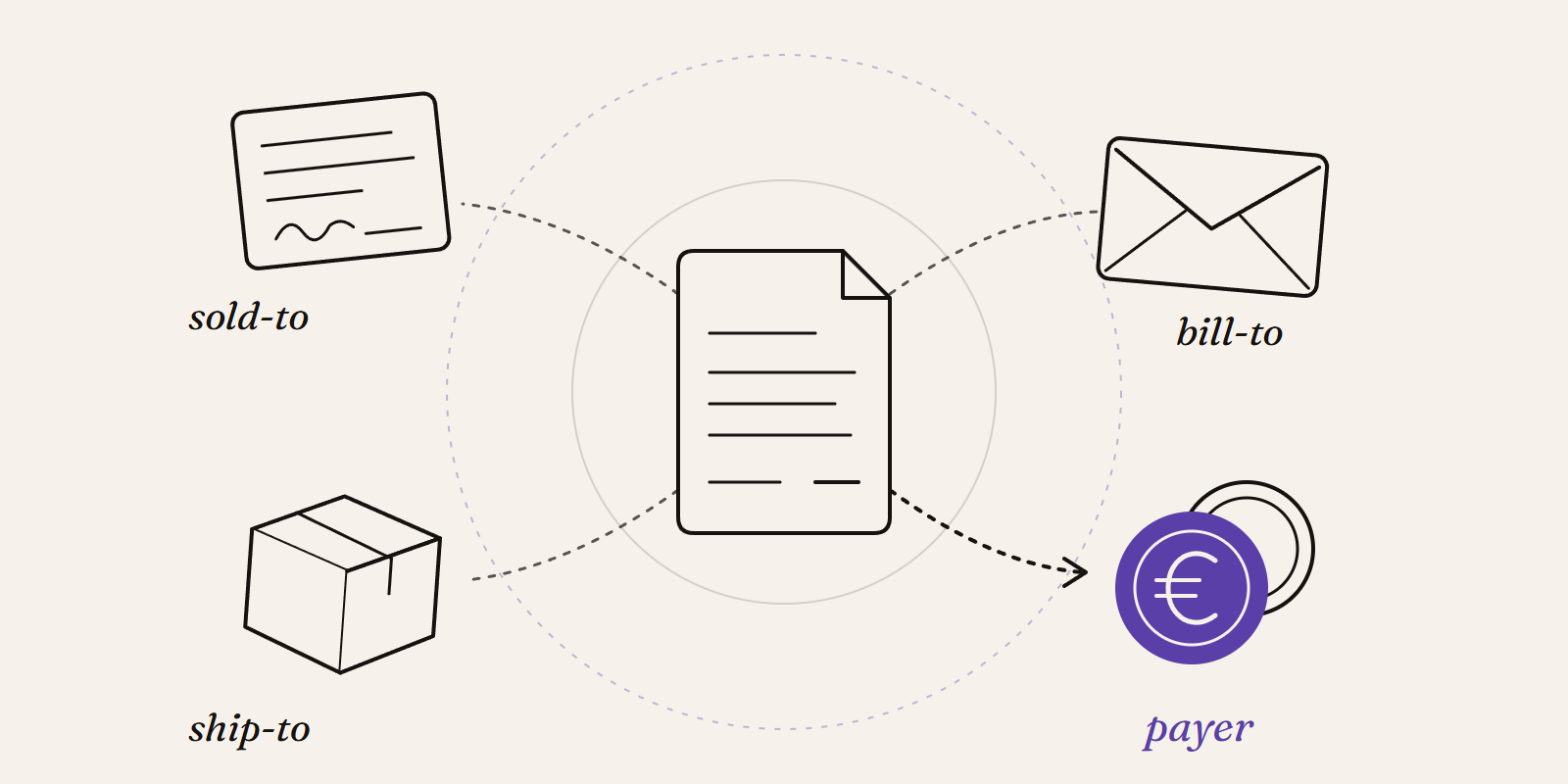
Sold-to, ship-to, bill-to and payer in SAP: who is actually your customer?
Sold-to, ship-to, bill-to and payer in SAP explained with a concrete example: who gets the invoice, whose account the receivable sits on, an...
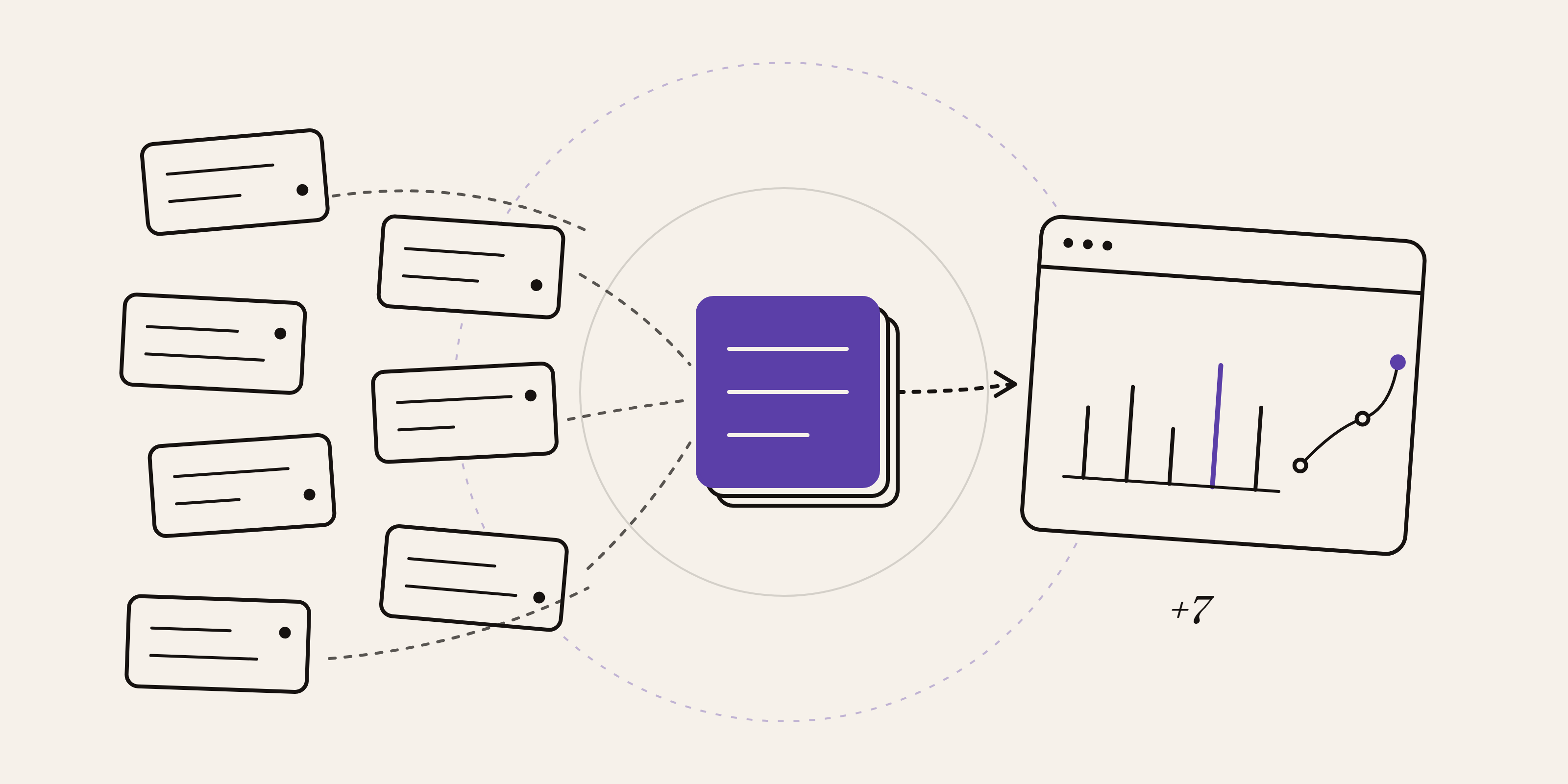
New Data Panda connectors in August 2026
Seven new Data Panda connectors from August 2026: ECB rates, ProfitPlus Webshop, SAP S/4HANA, Exact Venice, OpusFlow, ABAX and Sprout Social...