Power Platform admin center
What is the Power Platform admin center?
The Power Platform admin center is the central console for running Power Platform and related Dynamics 365 environments. Administrators use it to create and manage environments, watch capacity, set data policies, read analytics, configure security and handle support. You reach it at admin.powerplatform.microsoft.com.
The portal is often shortened to PPAC. Which pages and actions you see depends on your tenant role, your environment permissions, your licensing and the products present in the tenant. Microsoft has been rolling out a rebuilt version of the admin center, so the exact navigation shifts over time even though the responsibilities stay the same.
PPAC is not where apps are built. Apps, tables and flows are designed in their maker portals; the admin center manages the environments those resources live in.
Managing environments
Administrators can create, copy, back up, restore, reset and delete environments, within the limits of the environment type and their own rights. At creation you choose the region, the type, a security group and the Dataverse options. Some of these, such as enabling Dynamics 365 apps, cannot be undone later.
A Power Platform environment separates apps, flows, connections and any Dataverse data. Use naming, an owner, a purpose and lifecycle labels so the list stays readable. Dozens of unnamed sandboxes is an inventory, not a strategy.
Users, security and capacity
An environment security group can decide which licensed users are added to an environment. Resource sharing and Dataverse security roles then decide what those users can actually do. A tenant role such as Power Platform Administrator grants management abilities, but not automatic data rights inside every Dataverse database; that still needs a suitable role in the database itself.
The admin center shows tenant and environment usage for Dataverse database, file and log capacity, plus product-specific capacity where it applies. Capacity is more than a billing number. Fast growth can come from audit logs, attachments, duplicated records or a badly designed process. Set alerts and ownership, investigate growth per table or workload, and delete data only against a retention policy and with the dependencies in mind.
Data policies and governance
Data policies classify connectors and stop unwanted combinations, which is the heart of Power Platform Data Loss Prevention. Environment groups and Managed Environments add governance at scale. In the rebuilt admin center, the Managed Environments idea has grown into a wider environment management offering that groups security and governance controls together.
Depending on configuration, other controls include sharing limits, the solution checker, IP restrictions, customer-managed keys and telemetry export. A policy change can affect apps and flows that already exist, so analyse the impact, tell the owners and test before you enforce a broad block. Good data governance here means makers know the rules before they build, not after their app stops saving.
Inventory, usage and monitoring
PPAC includes experiences for inventory, usage, monitoring and recommended actions across Power Apps, Power Automate, Dataverse and other services. Use them to find unused apps, failing flows, capacity growth and adoption patterns, and to act on governance findings across the tenant.
These capabilities matter for a specific reason. The Power Platform Center of Excellence (CoE) Starter Kit, the low-code toolkit many organisations used for this visibility, is no longer actively maintained, and its core scenarios now live natively in the admin center. If you relied on the Starter Kit, the Inventory, Usage, Monitor and Actions experiences in PPAC are where that work moves. A dashboard still does not replace operational alerting for business-critical processes, so connect the technical signals to an owner and to real process impact.
Admin center versus maker portal
In make.powerapps.com and make.powerautomate.com, makers build apps, tables, flows and solutions inside a chosen environment. PPAC manages the environments, tenant-wide settings, capacity and governance. Some features overlap or link across, but the level of responsibility differs.
Power Platform administration also spans other portals. The Microsoft 365 admin center manages users, licensing and tenant roles, while Microsoft Entra manages identities and groups. Treat PPAC as the control point for a wider administration process: without owners, classification and follow-up, even a complete dashboard is only a pile of signals.
Keywords
Power Platform admin center
PPAC
Microsoft Power Platform
Power Platform environment
Power Platform Data Loss Prevention
data governance
Center of Excellence (CoE)
Managed Environments
capacity
governance
From the blog.
More pieces from the field on the same topic.
New Data Panda connectors in July 2026
Seven new Data Panda connectors from July 2026, with practical applications for inspections, cash flow, planning, projects, equipment and si...
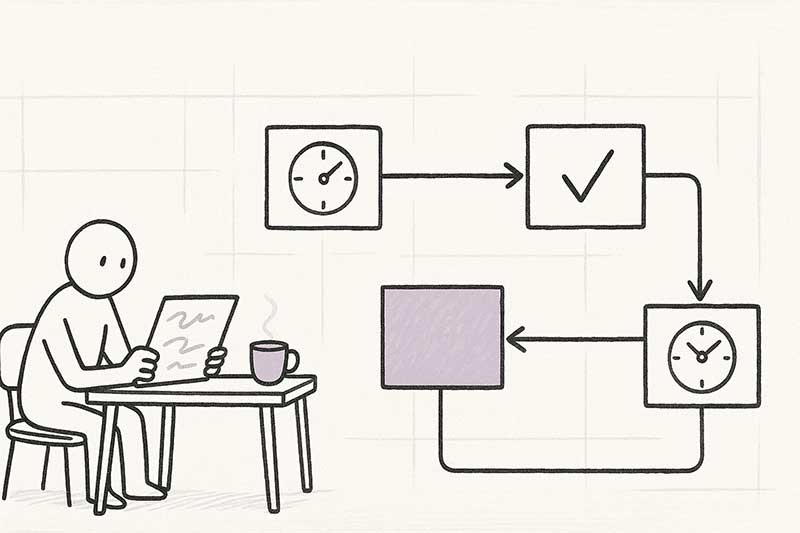
How to create an event log for process mining
A step by step guide on how you can create an event log for process mining.