Digital twin
What is a digital twin?
A digital twin is a living digital copy of a physical object, process, or system. That copy is continuously fed by sensor data, IT systems, and contextual information, so at any moment it reflects the state of the original. On top of that you can run simulations, test scenarios, make predictions, and validate decisions without changing a thing in the real world.
The term comes from industry (General Electric and NASA were using the concept for engines and space missions decades ago), but with the rise of IoT, cheap cloud storage, and AI it has become accessible for many more applications. Digital twins today show up in factories, wind farms, logistics networks, smart buildings, and even healthcare facilities.
Picture a digital twin as a live model of a train station on your desktop. Every tram, every lift, every ticket appears instantly on the digital model too. You can run simulations (what if we delay this tram by ten minutes? what if one entrance closes?) without bothering anyone in reality.
What distinguishes a digital twin from a regular simulation?
Digital simulations have been around for decades. A digital twin differs on three important points.
Live data
A classic simulation model is fed with historical data or assumptions. A digital twin knows the current state of the original, in near real time, through sensors and IT systems.
Two-way communication
A twin does not just follow reality, it can also push back: an instruction to a pump room, a setting to a production line, an alert to an operator. That is closed-loop integration.
Lifecycle
A simulation is run when a decision needs to be made. A twin lives permanently and grows with its physical sibling: new sensors come online, process changes get tracked, wear is followed over years.
Types of digital twin
Component twin
An individual part, for example one pump or one motor. Often used for predictive maintenance: detect when the pump is about to fail based on vibration and temperature.
Asset twin
A complete asset with multiple components, for example a wind turbine or a vehicle. Pulls component twins together into one system for monitoring and simulation.
System twin
A set of cooperating assets, for example a whole production line, a wind farm, or a distribution network. At this level flow, capacity, and dependencies become visible.
Process twin
A model of a process rather than a physical object. A life insurance application, an order fulfilment, a patient journey. Often fed by process mining on event logs and classic IT systems. Here digital twin comes close to business process management.
How do you build a digital twin?
Define scope and goal. Building a twin without a clear business case is a modelling exercise. Start with one question: why do we want to know this, which decisions will it support?.
Pull data sources together. Sensors, ERP, MES, maintenance system, historical data. Typically through IoT platforms, CDC streams, event logs, and APIs.
Build the conceptual model. Which objects, which relationships, which properties? Azure Digital Twins uses DTDL (Digital Twins Definition Language) for this design.
Synchronise with reality. Stream data into the model so its state reflects reality. This is the hardest step in practice: dirty data, unreliable sensors, ageing IT systems.
Add analytics and simulations. Reports, dashboards, predictive models, what-if simulations. This is where the value lives, not in the model itself.
Integrate back into operations. Alerts, recommendations, automated interventions. That closes the loop.
Applications
Predictive maintenance
Predict machine failure from vibration, temperature, and usage. Replace parts before they break, but not earlier than necessary.
Smart manufacturing
Every machine and every production line as a twin. Simulate a product switch before actually doing it. Optimise throughput and waste.
Smart buildings
HVAC, lighting, occupancy, energy usage followed live. Simulate what happens when you close a floor or adjust the temperature.
Logistics and transport
Ports, airports, rail networks that bring their own events together in a twin. React faster to disruptions, plan maintenance smarter.
Process twins in services
Insurers, banks, and hospitals build twins of customer or patient journeys. Measure where friction appears, simulate how a change would play out.
Digital twin in the Microsoft stack
Azure Digital Twins
Microsoft's platform to define and run digital twin models. DTDL describes the models, live data flows in through IoT Hub or Event Grid, queries run through a graph API.
Microsoft Fabric and Real-Time Intelligence
Microsoft Fabric is not a digital twin platform itself, but provides the data foundation: event streams, a KQL database for time series, a lakehouse for history, Power BI for visualisation. Many twin architectures in the Microsoft stack combine Azure Digital Twins (the model) with Fabric (the data layer).
Dynamics 365 and Supply Chain
Industrial-flavoured Dynamics modules offer pre-built twin scenarios for factories and warehouses.
Pitfalls
Building the model without sorting data first
A beautiful twin without reliable sensor feeds is decoration. Start with the data: completeness, frequency, quality. The model comes after.
Starting too broad
Building a twin for an entire factory in one go almost always fails. Start with one line, one machine, one process. Prove value, then expand.
Twin and original drifting apart
Physical changes (replacing a motor, rerouting a path) must flow into the model straight away. Without discipline the twin slowly falls behind and loses its value.
Security of the closed loop
A twin that sends instructions back to the production line is an attack surface. Apply OT cybersecurity: network segmentation, authentication, auditing.
Twin as a goal instead of a means
A good twin project begins and ends with the decisions it improves. Once the digital twin programme becomes more important than the operational value it provides, you stall.
Keywords
digital twin
iot
simulation
industry 4.0
process mining
azure digital twins
smart factory
predictive maintenance
real-time
manufacturing
From the blog.
More pieces from the field on the same topic.
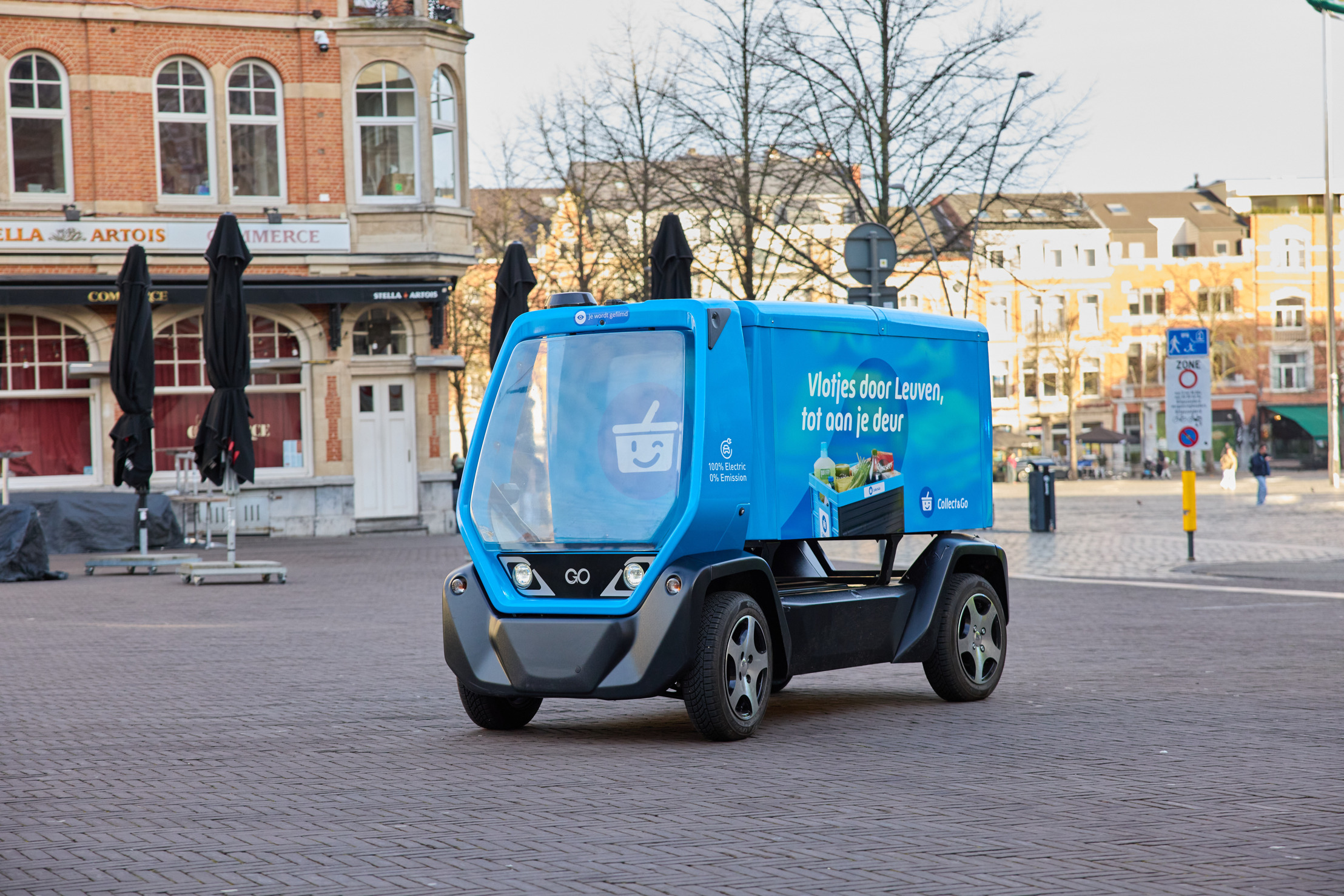
Collect&Go rolls out a driverless grocery cart in Leuven
Collect&Go and Telenet Business are testing an autonomous electric delivery cart in Leuven, steered over 5G. What it means for logistics and...
How to create an event log for process mining
A step by step guide on how you can create an event log for process mining.